If your real estate firm already uses email, listing sites, social media, and CRM campaigns, it’s fair to ask whether real estate printed marketing materials are still necessary. The short answer is yes, for many firms they still play a useful role. Print doesn’t replace digital marketing, but it supports the moments where buyers, sellers, tenants, investors, and referral partners interact with your brand in person.
Real estate is a local, visual, trust-based business. A well-printed listing flyer at an open house, a clean business card after a showing, or a targeted postcard in a farming area can make your firm feel more established and easier to remember. The key is not to print everything. It’s to print the right pieces, keep them current, and make ordering simple for your team.
If you’re building a broader plan, Premier Printing Services has a helpful real estate printing guide for teams that covers common print needs across offices, agents, and property marketing campaigns.
Why Real Estate Printed Marketing Materials Still Matter
Real estate decisions are rarely casual. People are dealing with large investments, relocations, leases, financing, family needs, and business plans. Printed materials give your team something tangible to leave behind after an appointment, open house, listing presentation, or networking event.
Print is also useful because real estate activity happens away from a desk. Agents meet people at properties, community events, offices, coffee shops, and neighborhood tours. A physical piece can carry the listing details, agent contact information, QR code, brand message, and next step without asking someone to search for it later.
For small firms, print can also help create consistency. If every agent uses different fonts, low-resolution logos, or homemade flyers, the brokerage may look less organized than it really is. Professionally prepared real estate marketing materials help keep the brand recognizable across agents and locations.
Where Print Helps a Real Estate Firm Most
Open houses and property showings
Open houses are one of the clearest use cases for print. Property flyers, feature sheets, directional signs, sign-in cards, brochures, and neighborhood information sheets can help visitors understand the property without relying only on conversation.
Printed open house materials should be easy to scan. Buyers may walk through multiple homes in one day, so clear photos, property highlights, floor plan notes, contact details, and a QR code to the online listing can help your property stand out later.
Listing presentations
When an agent is trying to win a listing, a printed presentation can feel more polished than a screen-only conversation. It can include market positioning, comparable property summaries, marketing plans, staging recommendations, photography examples, and brokerage information.
Not every listing presentation needs a large bound packet. Some firms prefer a branded folder with selected inserts that can be updated easily. This approach can reduce waste and allow agents to customize materials for different property types.
Neighborhood farming and direct mail
Direct mail still has a place in real estate when the message is relevant and the mailing list or area is thoughtful. Postcards can announce recent sales, market updates, open houses, agent introductions, property management services, or local expertise.
If your team is considering mailers, it’s worth reviewing the basics before production. Premier’s post on whether mass mailers actually work explains why offer, audience, design, and repetition matter. You can also explore mass mailing services if you need help coordinating print and mailing details.
Agent networking and referrals
Business cards, note cards, presentation folders, branded envelopes, referral cards, and small leave-behind pieces still support relationship-building. Real estate professionals often rely on referrals from past clients, lenders, attorneys, contractors, relocation contacts, and local businesses.
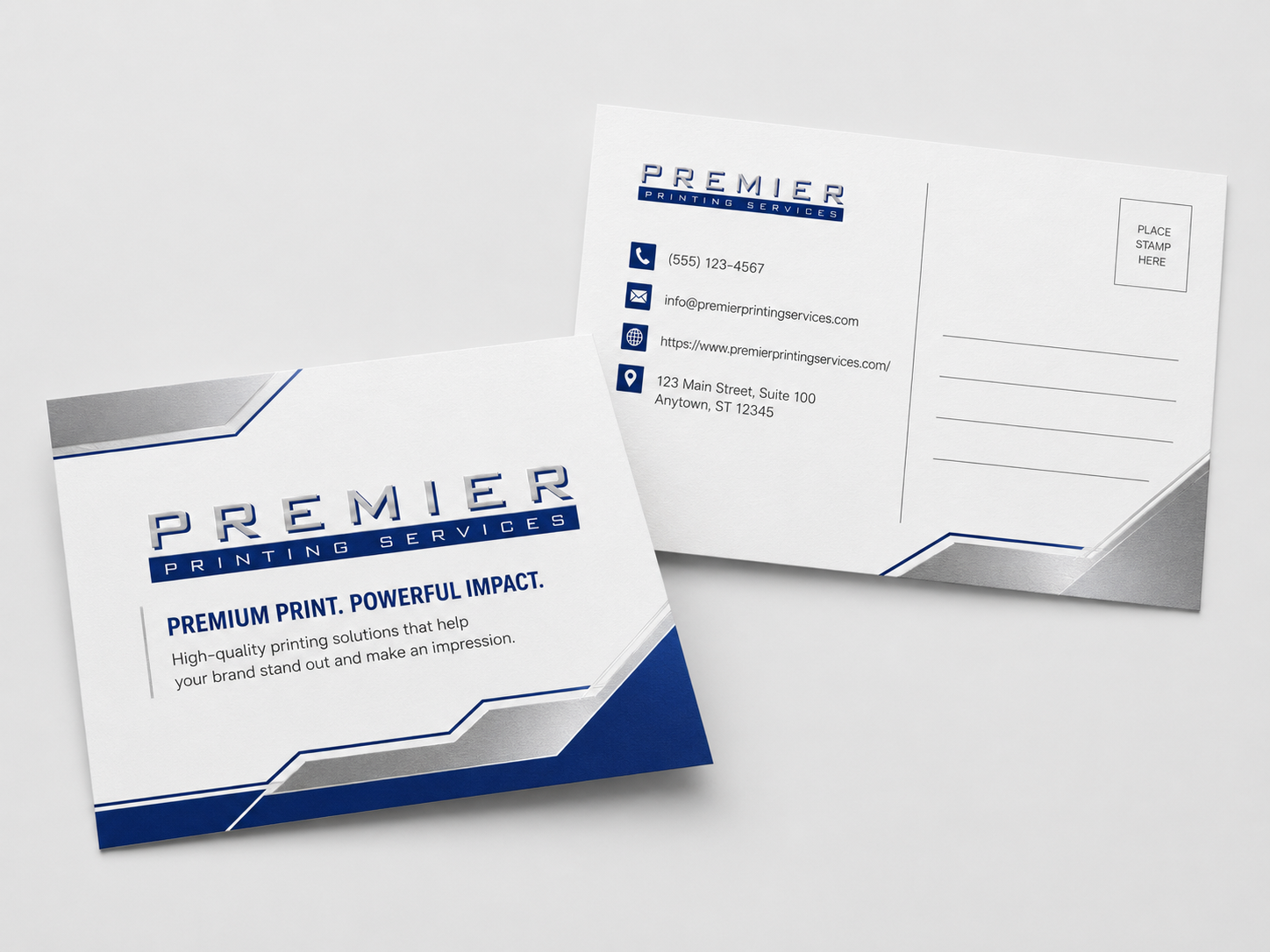
A business card won’t close a deal by itself, but a poor-quality card can leave the wrong impression. For practical guidance, see these business card design tips and common business card printing mistakes to avoid.
What Real Estate Marketing Materials Are Worth Printing?
The best mix depends on your market, sales cycle, property type, and how your agents work. Most real estate firms don’t need every print product at once. Start with the materials your team uses regularly and add campaign-specific pieces as needed.
- Business cards: Useful for agents, brokers, office staff, and referral meetings.
- Property flyers and feature sheets: Helpful for open houses, buyer packets, and listing appointments.
- Postcards: Good for geographic farming, just listed, just sold, market updates, and event invitations.
- Presentation folders: Useful for listing packets, buyer guides, relocation information, and commercial property materials.
- Brochures: Helpful for brokerage overviews, luxury listings, property management services, or commercial services.
- Open house and directional signs: Important for local visibility and wayfinding, where allowed by local rules and property guidelines.
- Envelopes and letterhead: Useful for formal communication, seller packets, and property management notices.
- Event materials: Banners, table signs, rack cards, and handouts for community events, investor seminars, or recruiting events.
If your firm supports multiple agents or offices, you may also want to review real estate printing with an online portal. A portal can help standardize approved templates, reduce repeat file setup, and make reordering easier for busy teams.
Common Print Mistakes Real Estate Firms Should Avoid
Many print problems are not caused by the press. They happen before the file is approved. Real estate materials often move quickly because listings go live, open house dates shift, and agents need collateral on short notice. That urgency can lead to avoidable mistakes.
- Using low-resolution photos: Listing photos that look fine on a phone may not reproduce well in print. Ask your photographer or designer for print-ready images when possible.
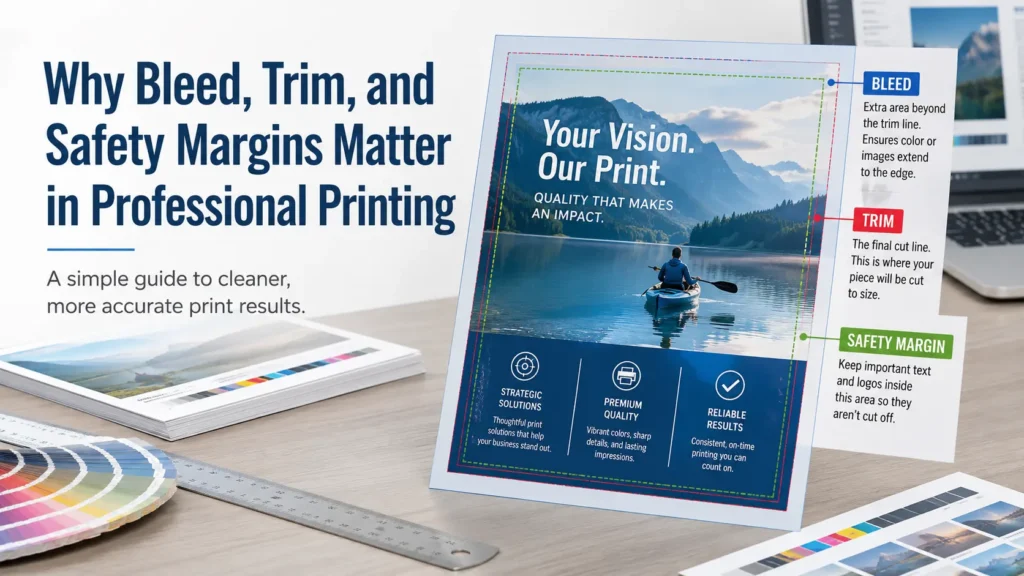
- Forgetting bleed and safe margins: Text, logos, and QR codes should not sit too close to the trim edge. Learn more about bleed, trim, and safety margins before sending files.
- Printing outdated details: Price changes, open house times, unit numbers, website links, and agent phone numbers should be checked carefully.
- Skipping proofreading: MLS information, disclaimers, license numbers, fair housing language, and contact details should be reviewed by the appropriate person on your team.
- Overloading the design: Too many photos, icons, logos, and paragraphs can make a flyer harder to read.
- Waiting too long to order: Even simple print projects need time for file review, proofing, production, finishing, and shipping or pickup.
For deadline planning, Premier’s print deadline checklist is a useful reference for teams that need to coordinate artwork, copy, approvals, and final files.
File Setup Tips Before You Request a Quote
Before ordering real estate printed marketing materials, gather the details your print provider will need. This usually includes the finished size, quantity, paper preference, color requirements, folding or finishing needs, mailing requirements if applicable, and the date you need materials in hand.
File setup can vary by product, so confirm final specs with the print shop before production. In general, your team should pay attention to image resolution, document size, bleed, color mode, embedded fonts, linked images, and PDF export settings. If you’re unsure, use Premier’s Prepress Toolkit as a starting point.
For designs that will be reused often, such as agent cards, property flyer templates, postcards, or listing presentations, it may be worth having a designer build proper templates from the start. Premier also offers prepress and graphic design services for teams that need help cleaning up artwork or preparing print-ready files.
Paper, Finishing, and Format Considerations
Paper choice affects how a piece feels, how images reproduce, and how durable the finished product is. A lightweight flyer may be fine for a one-day open house, while a listing presentation or premium brochure may call for a different stock. There isn’t one right answer for every real estate firm.
Coated stocks can help photography feel crisp, while uncoated stocks may feel more natural for note cards or letterhead. Finishing options such as folding, scoring, binding, laminating, or special coatings may be useful, depending on the project. Ask the print shop what makes sense for the piece and budget before committing.
If you want a broader overview, this guide to choosing the right paper stock explains what to think about before placing an order.
When to Ask for Help
It’s smart to involve your printer early if the project includes mailing, multiple versions, variable agent information, custom sizes, folding panels, QR codes, signage, or strict deadlines. A short conversation before design begins can prevent rework later.
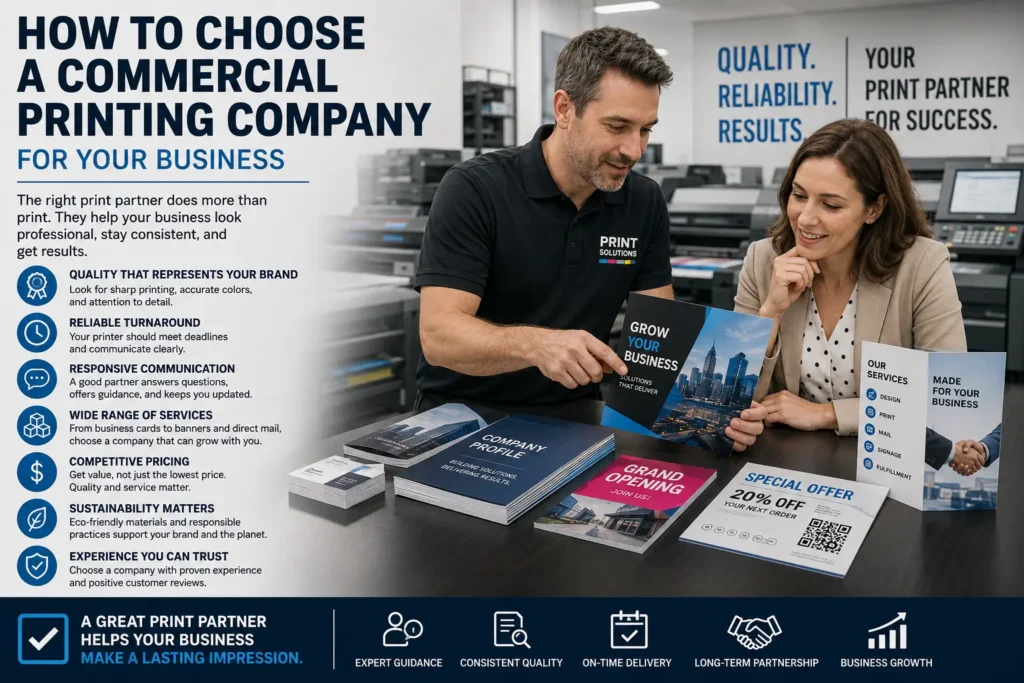
You should also ask for help if your firm has several agents creating their own files. Inconsistent materials can become a brand problem and an administrative headache. A print partner can help identify which pieces should be templated, which need design cleanup, and which can be ordered as needed.
For larger teams, a standardized ordering process can be useful. Premier’s article on corporate printing portals explains how approved materials, user access, and repeat ordering can work for organizations with recurring print needs.
So, Does Your Firm Need Print?
Most real estate firms benefit from some level of print, but the best approach is selective. Print the pieces that support real conversations, local visibility, listing activity, client trust, and agent follow-up. Skip materials that don’t have a clear audience or purpose.
The strongest print programs are planned, consistent, and easy for staff to manage. They use good photos, clean layouts, accurate information, and realistic timelines. They also connect with digital tools through QR codes, landing pages, email follow-up, and online listings.
Real estate printed marketing materials still have a practical place in a modern marketing plan. If your firm needs help planning a project, checking files, choosing paper, setting up repeat materials, or preparing a quote, contact Premier Printing Services for more information or project help.