If you’ve ever asked, “do mass mailers actually work?” you’re not alone. Small business owners and marketing teams ask this all the time, especially when they’re comparing direct mail with email, social ads, local signage, and other marketing channels.
The short answer is yes, mass mailers can work. But they don’t work automatically just because you send a lot of postcards or flyers. The results depend on your list, your offer, your design, the quality of the printing, and how well the campaign matches your audience.
A strong mailing campaign is planned before anything goes to print. If you’re still early in that planning stage, this guide will help you understand what matters before you request a quote or approve artwork.
Do Mass Mailers Actually Work for Small Businesses?
Mass mailers can be useful for small businesses because they put a physical message directly into the hands of a defined audience. That may include households in a neighborhood, current customers, past buyers, tenants, donors, patients, members, or business contacts.
Unlike a digital ad that disappears with a scroll, a printed mailer has a physical presence. Someone may place it on a counter, bring it to the office, hand it to a spouse, or keep it near a phone or computer. That doesn’t guarantee a response, but it does give the message a different kind of staying power.
Direct mail tends to work best when it has a clear purpose. A restaurant may promote a seasonal menu. A property manager may notify tenants about services. A school or nonprofit may send event information. A local service business may target homes in specific ZIP codes or carrier routes.
If you’re trying to build a broader campaign around print, it may help to review the basics of how to start a print marketing campaign before finalizing your mailer.
When Mass Mailers Make the Most Sense
Mass mailing is not the right fit for every message. It works best when your audience is easy to define and your call to action is simple.
For example, a mailer may make sense when you want people to visit a storefront, scan a QR code, call for an appointment, bring in a coupon, attend an event, request information, or remember your business when they need a service later.
Mass mailers are often used for:
- Grand openings and relocation announcements
- Seasonal promotions
- Local service area marketing
- Political, union, school, and nonprofit communications
- Customer reactivation campaigns
- Event invitations and reminders
- Real estate, property management, and neighborhood outreach
If you’re mailing to geographic areas instead of a purchased list, you may also want to learn how EDDM mailing helps small businesses grow. Every Door Direct Mail can be a useful option for certain local campaigns, but requirements can vary, so it’s smart to confirm details before production.
What Makes a Mass Mailer More Effective?
A mailer has only a few seconds to earn attention. The strongest pieces are usually clear, specific, and easy to act on.
A focused audience
The mailing list or delivery area matters as much as the design. A beautiful postcard sent to the wrong audience may not perform well. Before printing, think through who should receive the piece and why they would care.
Current customers may need a different message than cold prospects. Homeowners may respond to a different offer than office managers. A general announcement can work, but a specific message usually gives people a clearer reason to respond.
A simple offer
Don’t ask one mailer to do too much. If you include five promotions, three phone numbers, multiple QR codes, and a long block of copy, readers may not know what to do next.
Use one main offer or message. Make the call to action obvious. Examples include “Schedule a consultation,” “Bring this card in,” “Scan to view the menu,” or “Call for a quote.”
A design that reads quickly
Direct mail design should be easy to scan. A strong headline, short copy, clear contact information, and enough white space can help the piece feel approachable.
Small type, low contrast, crowded layouts, and weak images can make a mailer feel harder to read. If the design includes a photo, logo, or QR code, make sure those elements are suitable for print before approving the file.
A clear way to measure response
You don’t need a complicated tracking system, but you should have some way to judge whether the mailer helped. This could be a unique phone extension, campaign-specific landing page, QR code, coupon code, or simple intake question like “How did you hear about us?”
Tracking doesn’t have to be perfect to be useful. Even basic response information can help you improve the next mailing.
Common Mistakes That Hurt Mass Mailer Results
Most mass mailing problems start before the job reaches the press. A few common issues can reduce response, delay production, or create extra costs.
- Using a weak or outdated mailing list: Bad addresses and poorly matched audiences can waste print and postage.
- Trying to say everything: Too much copy makes the mailer harder to understand.
- Forgetting the call to action: People need to know what step to take next.
- Submitting low-resolution artwork: Images that look fine on screen may not print clearly.
- Ignoring mailing panel requirements: The address area, indicia, barcode space, and clear zones need to be considered before design is finalized.
- Approving too quickly: Names, dates, phone numbers, QR codes, and addresses should be checked carefully before production.
If you’ve had last-minute file problems before, this print deadline checklist for artwork and approvals is a useful planning resource.
File Setup and Prepress Considerations
Mass mailers need to be set up correctly for both printing and mailing. Specs can vary based on size, folding, paper, mailing class, address method, and postal requirements, so confirm details with your print shop before final production.
In general, your artwork should account for bleed, trim, safety margins, resolution, color mode, and any mailing areas that must remain clear. A small layout issue can become a big problem when you’re printing hundreds or thousands of pieces.
Before sending files, check that:
- Important text and logos are not too close to the trim edge
- Bleed is included if the artwork runs to the edge
- Images are high enough quality for print
- Fonts are embedded or outlined when needed
- QR codes are tested on multiple devices
- Phone numbers, URLs, dates, and offer details are correct
- The mailing panel is set up according to the job requirements
For more guidance on artwork, bleed, resolution, color, and proofing, use the Premier Prepress Toolkit. If your team needs layout help or file cleanup, prepress and graphic design services can also help get the project production-ready.
Paper, Size, and Finishing Choices Matter
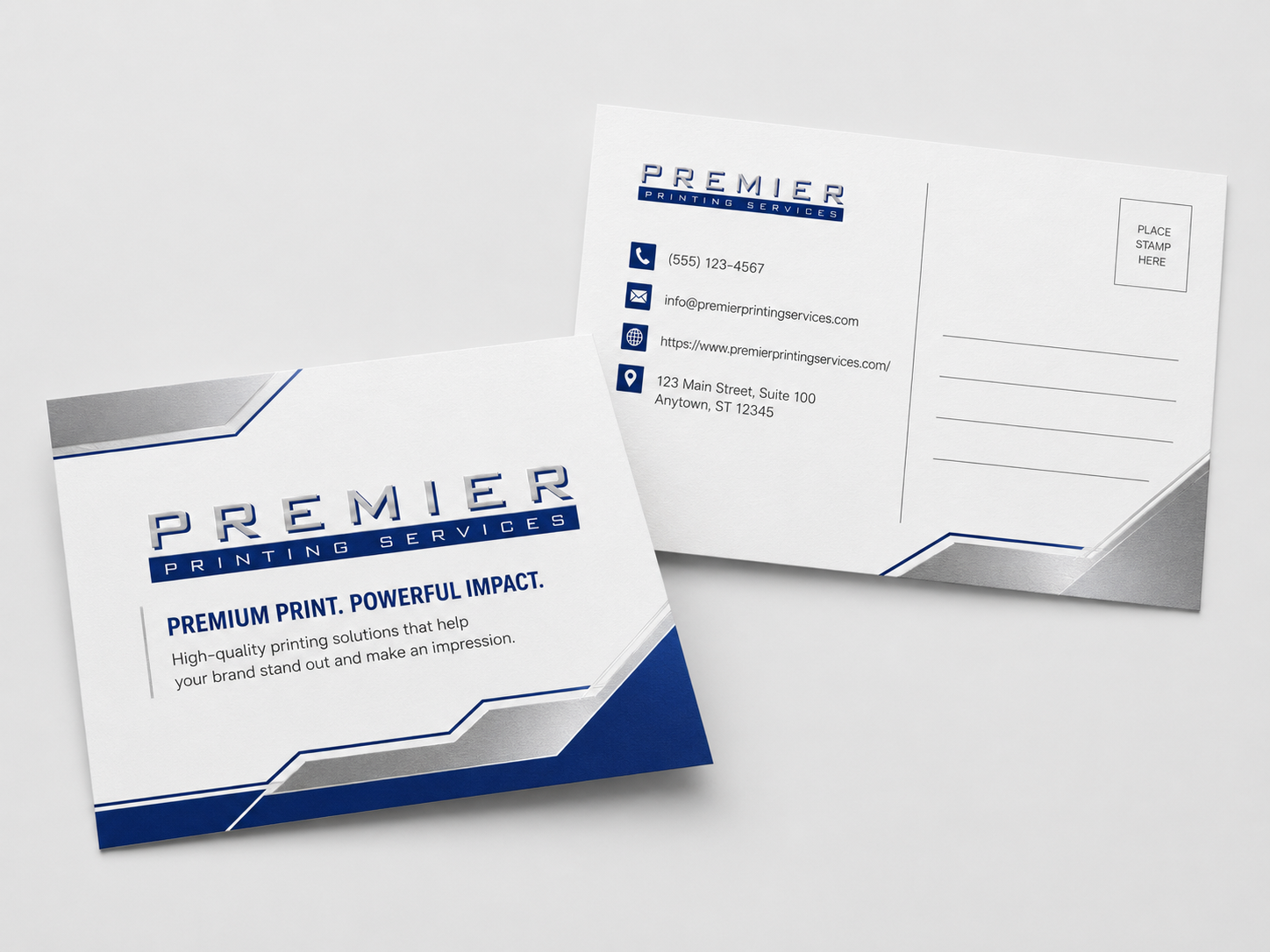
The format of your mailer affects cost, handling, design space, and how the piece feels. Common formats include postcards, folded self-mailers, letters with envelopes, brochures, and flyers prepared for mailing.
Postcards are often used because the message is visible right away. Folded pieces give you more room for details. Envelopes can feel more formal or private, which may matter for financial, legal, healthcare, membership, or donor communications.
Paper choice also changes the impression. A heavier stock can feel more substantial, while a lighter option may make sense for certain budget or distribution goals. Coated and uncoated papers have different looks and writing surfaces. If you’re comparing options, this guide to paper choice for printing is a helpful starting point.
Finishing choices, such as folding, scoring, perforation, coating, or tabbing, may depend on the mailer format and postal rules. Always confirm production and mailing requirements before approving a design.
Timeline Expectations Before You Order
Mass mailers involve more than printing. Your project may include design, proofing, list preparation, addressing, printing, finishing, postal paperwork, and mail entry. The more pieces involved, the more important it is to plan ahead.
Build in time for internal review. Someone should check the offer, legal or compliance language if needed, mailing list accuracy, artwork, and final proof. If several people need to approve the piece, decide who has final approval before the deadline gets tight.
Exact timelines vary by project, quantity, materials, mailing requirements, and shop schedule. If you have a fixed in-home date or event date, share that early so the printer can help you work backward from the deadline.
How to Decide Whether Mass Mailing Is Right for You
Before requesting a quote, ask a few practical questions:
- Who exactly are we trying to reach?
- Do we have a list, or do we need geographic targeting?
- What action do we want people to take?
- Is our offer strong enough to earn a response?
- Do we have print-ready artwork, or do we need design support?
- How will we track response?
- Is there a deadline tied to an event, sale, or announcement?
If you can answer those questions, you’re in a much better position to choose the right format and request an accurate quote. If you can’t answer them yet, a print provider can still help you narrow the options.
For businesses that need print support beyond one campaign, it may also be worth reviewing small business printing services or professional mass mailing services to see how print, mailing, and repeat ordering can fit together.
Mass Mailer FAQs
Are postcards better than letters for mass mailing?
It depends on the message. Postcards are visible immediately and can work well for promotions, reminders, and local awareness. Letters may be better for formal, private, or detailed communication. The right format depends on your audience, content, and mailing requirements.
Can I use the same design for print and email?
You can keep the same campaign theme, but the design should usually be adjusted for print. A direct mail piece needs proper bleed, margins, image resolution, color setup, and mailing space. A layout built only for screens may not be print-ready.
How many pieces should I mail?
There is no single right quantity. It depends on your budget, audience size, campaign goals, and mailing strategy. A targeted list may be smaller, while a geographic campaign may involve a larger distribution area. Ask your printer for quote options if you’re comparing quantities.
Should I send one mailer or multiple mailings?
One mailer can be useful for a clear announcement or deadline-driven offer. Repeated mailings may help with awareness and follow-up, especially if you’re trying to stay top of mind. The best approach depends on your sales cycle and budget.
Conclusion: Do Mass Mailers Actually Work?
So, do mass mailers actually work? They can, especially when the campaign has a focused audience, a clear offer, clean design, accurate files, and enough time for proper production and mailing. The mailer itself is only one part of the campaign, but when it’s planned well, it can be a practical way to reach customers, prospects, members, donors, or local households.
If you’re considering a postcard, flyer, letter, or full direct mail campaign, contact Premier Printing Services for more information or help planning your project.