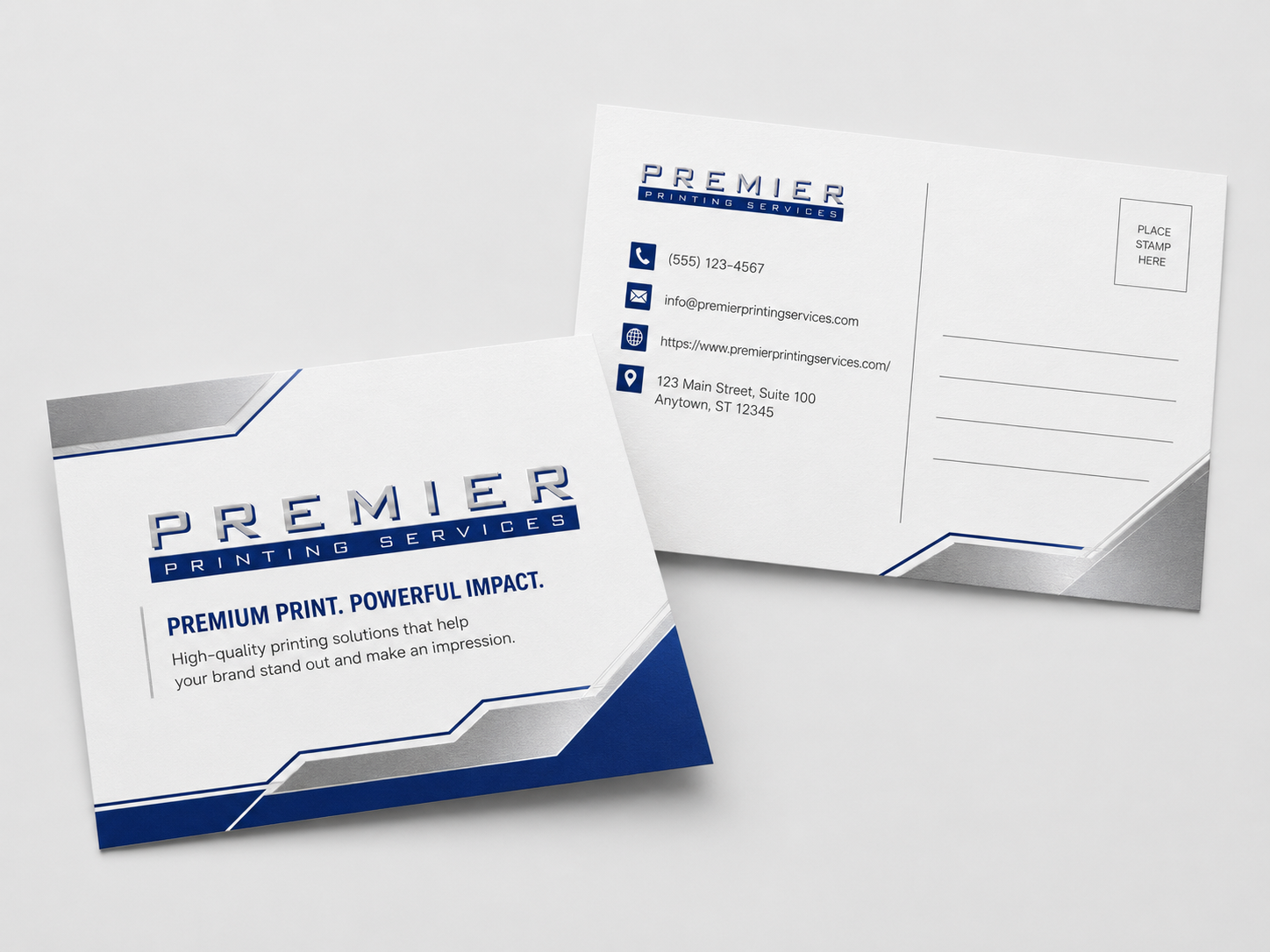
A successful print marketing campaign starts before anything goes to press. The best results usually come from clear goals, clean artwork, realistic timelines, and print materials that match how your audience will actually receive and use them.
For small businesses, office managers, and marketing teams, print can support many goals: store traffic, appointment requests, event attendance, customer retention, brand awareness, or direct response. The key is to plan the campaign as a complete project, not just as a single flyer, postcard, brochure, or sign.
This guide walks through the practical steps to take before you request a quote, approve a proof, or schedule distribution.
Start With the Goal of Your Print Marketing Campaign
Before choosing paper, size, or quantity, define what the campaign is supposed to do. A postcard announcing a seasonal offer has a different job than a brochure for a sales meeting or a banner for a storefront promotion.
Start with one main goal. For example, you may want people to call for an estimate, scan a QR code, visit a landing page, bring in a coupon, attend an event, or remember your company when they need your service later.
Once the goal is clear, the rest of the project becomes easier to plan. Your message, format, call to action, distribution method, and quantity should all support that goal.
Questions to answer before ordering
- Who is the audience?
- What action do you want them to take?
- Where will they receive or see the printed piece?
- Does the campaign need to match other materials, such as signage, emails, or sales sheets?
- Who will approve copy, design, and final proofs?
If you’re planning print for a smaller company, it may help to review the broader options available through small business printing services.
Choose the Right Print Materials for the Campaign
Different print pieces do different jobs. Choosing the right format is one of the most important decisions in a print marketing strategy.
Flyers are useful for announcements, handouts, local promotions, and events. Postcards work well for mailing campaigns and simple offers. Brochures can explain services in more detail and are often used for sales meetings, lobbies, trade shows, and leave-behinds.
Business cards still matter for networking, appointments, and customer-facing staff. If cards are part of your campaign, make sure the design is readable and consistent with the rest of your materials. You can also review common issues in this guide to business card printing mistakes to avoid.
For physical locations, events, or outdoor visibility, banners and signs can extend the campaign beyond handouts and mail. If that applies to your project, banner printing may be a useful part of the plan.
Plan Distribution Before You Print
It is easy to focus on design first, but distribution affects nearly every print decision. A piece handed out at an event may need to be compact and easy to carry. A direct mail postcard needs to account for mailing requirements. A sales brochure may need a more polished feel because it represents your company during a buying decision.
If you’re mailing the campaign, talk with your printer early. Mailing projects can involve address lists, postal regulations, indicia, paper choices, layout requirements, and processing steps. Exact requirements can vary, so confirm details before final artwork is approved. Premier Printing Services offers direct mail printing and mass mailing services for campaigns that need print and mailing support.
Also think about timing. When does the piece need to be in someone’s hand? Work backward from that date and allow time for design, review, revisions, file checks, proofing, production, finishing, delivery, and mailing if needed. Turnaround depends on the project, quantity, materials, finishing, and current production schedule, so it is always best to ask before assuming a date.
Build a Clear Message and Call to Action
Print works best when the message is focused. A common mistake is trying to fit every service, feature, and selling point onto one piece. That usually makes the design crowded and weakens the call to action.
Decide what the reader needs to know first. Use a clear headline, a short explanation, and one primary action. If you include a QR code, phone number, coupon code, or website, make sure it is large enough to read and easy to use.
For multi-piece campaigns, keep the message consistent across postcards, flyers, signs, inserts, and sales sheets. Repetition helps people connect the materials and recognize the campaign.
Prepare Artwork and Files the Right Way
File setup is one of the most common places print projects run into delays. Low-resolution images, missing bleed, incorrect color setup, unsafe margins, and last-minute copy changes can all slow down production.
Before submitting artwork, review the basics in the Premier Prepress Toolkit. If you’re not familiar with bleed, trim, and safety margins, this article on why bleed, trim, and safety margins matter is also a helpful starting point.
Print specs can vary by product, equipment, size, paper, and finishing. Always confirm the final requirements with the print shop before production, especially for pieces with folds, mailing panels, borders, die cuts, or large areas of color.
Basic file setup tips
- Use high-quality images and logos suitable for print.
- Include bleed when the design runs to the edge of the piece.
- Keep important text and logos inside the safe area.
- Proofread names, dates, phone numbers, URLs, QR codes, and addresses.
- Confirm final size, folds, paper, and finishing before exporting files.
- Ask whether a print-ready PDF or packaged design file is preferred.
If you need design help, layout cleanup, or file repair, Premier’s prepress and graphic design services can help get your files ready for production.
Choose Paper, Size, and Finishing With Purpose
Paper choice affects how a printed piece feels, folds, mails, and holds up during handling. A lightweight handout may be fine for a short-term promotion, while a sales brochure, menu, invitation, or premium leave-behind may call for a different stock.
Finishing can also change the impression and function of the piece. Folding, scoring, coating, binding, trimming, and other finishing options should be planned early because they can affect design layout and production steps.
There is no single best paper for every campaign. The right choice depends on budget, use, quantity, mailing method, durability, and brand expectations. For a helpful overview, read this guide on how to pick the right paper stock.
Set a Realistic Review and Approval Process
Many print delays are not caused by printing. They happen during review. Copy changes, missing approvals, unclear responsibilities, and late edits can push a project back quickly.
Decide who has final approval before you begin. If several people need to review the piece, collect feedback in one round whenever possible. Make sure someone checks the details that matter most, such as dates, offer terms, phone numbers, addresses, spelling, logos, legal language, and mailing information.
A proof is your opportunity to catch issues before production. Review it carefully. For a practical planning tool, use this print deadline checklist for artwork, copy, and approvals.
Common Print Campaign Mistakes to Avoid
Most print campaign problems are preventable with a little planning. Here are some of the issues print shops see often.
- Starting with quantity before strategy: Know how the materials will be used before deciding how many to print.
- Using web images for print: Images that look fine on a screen may not print clearly.
- Forgetting bleed and safe margins: This can create unwanted white edges or text too close to the trim.
- Adding too much copy: A crowded layout is harder to read and less likely to get a response.
- Waiting too long to ask about mailing: Mailing requirements should be considered during layout, not after design approval.
- Skipping the proof review: Small errors can become expensive or time-consuming once the job is in production.
- Assuming every print product has the same timeline: Finishing, materials, quantity, and mailing can all affect scheduling.
When to Ask a Print Shop for Help
You do not need to have every detail figured out before contacting a printer. In fact, it is often better to ask early, especially if the campaign involves mailing, multiple pieces, special finishing, tight timing, or files created by several people.
A professional print team can help you think through format, paper, production concerns, file setup, and practical ways to keep the project on track. If you’re comparing providers or trying to decide what level of support you need, this guide on how to choose a commercial printing company may help.
For teams that order repeated materials, have multiple locations, or need brand consistency, a company print portal may also be worth discussing. This article explains what a corporate printing portal is and how it works.
FAQ: Starting a Print Marketing Campaign
What should I prepare before requesting a print quote?
Prepare the product type, size, quantity, paper preference if known, color requirements, finishing needs, delivery or mailing details, and your target deadline. If you have artwork, include it or describe its status.
How early should I contact the printer?
Contact the printer as early as possible, especially if the project includes design, mailing, folding, special paper, multiple pieces, or a firm event date. Exact production timing varies by job, so confirm scheduling before committing to a launch date.
Do I need a finished design before talking to a print shop?
No. You can ask questions before your design is final. Early input can help prevent layout issues, file problems, and production delays.
What is the best print piece for a small business campaign?
It depends on the goal. Flyers are good for handouts and local promotions. Postcards work well for direct mail. Brochures are useful when you need more detail. Signs and banners help with visibility at events or physical locations.
Conclusion: Plan the Campaign Before You Print
A strong print marketing campaign is built on clear goals, practical material choices, clean files, and enough time for review and production. When those pieces are in place, print becomes easier to manage and more useful for your business.
If you’re planning a campaign and want help choosing materials, checking files, or preparing a quote, contact Premier Printing Services for more information or project help.