Law firm print materials play a bigger role than many offices realize. They help attorneys make a professional first impression, keep client communications consistent, support referral marketing, and make day-to-day administration easier.
For a small or growing firm, the challenge is knowing what to order first and what can wait. An office manager may need letterhead and envelopes right away, while the marketing team may be focused on brochures, direct mail, or event materials. The right mix depends on your practice areas, client touchpoints, and how often your firm communicates in print.
This guide walks through the most useful printed materials for law firms, along with practical ordering tips, common mistakes, and file setup considerations to review before production.
Start with the law firm print materials clients see first
Some printed pieces are basic, but they matter. Clients, referral partners, court contacts, vendors, and community organizations all form impressions based on the materials your firm sends or hands out.
If your firm is building a print program from scratch, start with the essentials: business cards, letterhead, envelopes, note cards, and presentation folders. These pieces create a consistent identity across consultations, mailings, client packets, and follow-up communication.
If your firm already has branding in place, review whether your printed materials match your current logo, colors, attorney names, office locations, phone numbers, website, and disclaimers. Outdated contact information is one of the most common reasons legal offices need rushed reprints.
Business cards for attorneys and staff
Business cards are still one of the most practical print materials for attorneys. They are used at consultations, networking events, bar association meetings, community events, mediation sessions, and referral meetings.
For law firms, readability matters more than decoration. Use clear typography, enough contrast, and a layout that leaves room for names, titles, phone numbers, email addresses, website URLs, office locations, and any required professional designations.
Before ordering, decide whether every attorney and staff member should have the same layout or whether partners, associates, and administrative staff need different title treatments. If your firm orders cards often, it may help to standardize the layout so updates are faster and less prone to errors.
For more planning tips, review these practical business card design tips and common business card printing mistakes to avoid.
Letterhead, envelopes, and correspondence materials
Printed letterhead and envelopes are core legal office printing items. Even when much of your communication happens by email, formal letters, notices, document cover sheets, settlement correspondence, and client communications may still require a polished printed format.
Letterhead should be easy to read and should leave adequate space for the actual letter content. Avoid placing heavy graphics in areas where text, signatures, or stamps may need to appear. If your firm has multiple offices, confirm whether you need one shared letterhead design or location-specific versions.
Envelope printing should also be planned carefully. Return addresses, logos, office locations, and mailing indicia, if used, need to be positioned correctly for the envelope style. If you are unsure which envelope size or format fits your mailing process, ask your print provider before production. Premier Printing Services has a dedicated envelope printing page that can help you start the conversation.
Presentation folders and client intake packets
Presentation folders are useful for consultations, new client packets, closing documents, estate planning binders, settlement summaries, and informational materials. A well-made folder helps keep documents organized and gives clients something tangible to reference after a meeting.
Common folder contents may include attorney bios, practice area overviews, intake forms, fee information, checklists, privacy notices, next-step instructions, and business cards. The exact contents should be reviewed by your firm leadership or legal team, especially if any language has compliance or advertising considerations.
When ordering folders, think about how much material they need to hold. A lightweight folder may be fine for a few sheets, but larger packets may need a sturdier stock or reinforced format. Pocket style, business card slits, coating, and paper weight can all affect the final result, so it’s worth discussing options before placing a larger order.
Brochures, flyers, and practice area sheets
Law firm marketing materials should explain what the firm does in plain language. Brochures and one-page practice area sheets can be useful for family law, estate planning, personal injury, business law, real estate law, immigration, employment law, and other practice areas where clients often need a simple overview.
Keep the content focused. A brochure should not try to answer every possible question. It should help a potential client understand the firm’s services, what to expect next, and how to schedule a consultation.
Flyers can also work well for seminars, webinars, community events, sponsorship tables, and local outreach. If your firm is planning a broader campaign, this guide on how to start a print marketing campaign is a helpful resource for organizing goals, audiences, and print quantities.
Direct mail and announcement cards
Direct mail can be useful for law firms when the message is targeted and appropriate. Examples include new office announcements, attorney additions, seminar invitations, estate planning workshops, business law updates, seasonal reminders, and referral partner outreach.
Mailing projects need more planning than a simple flyer order. You may need to prepare a mailing list, confirm the mail piece size, review postage options, approve addressing, and allow time for production and mailing preparation. Exact mailing requirements can vary, so confirm details with the print shop before production.
If your firm is considering postcards, letters, or larger mail campaigns, review Premier Printing Services’ mass mailing services and this article on whether mass mailers actually work.
Event materials and community outreach printing
Many law firms participate in local events, legal clinics, nonprofit fundraisers, business expos, school events, chamber meetings, and continuing education programs. Printed materials help your table, booth, or presentation look organized.
Useful event items may include table signs, banners, flyers, rack cards, name badges, appointment cards, informational handouts, and branded folders. If your team attends conferences or expos, a trade show style checklist can help you avoid last-minute gaps. Start with this trade show printing checklist and adapt it to your legal event.
For larger signage, think about where the piece will be used. Indoor signs, outdoor banners, retractable displays, and directional signs may require different materials and finishing. Confirm placement, size, durability needs, and installation method before ordering.
Internal office forms and operational print materials
Not every print project is client-facing. Law firms also need internal materials that keep the office running smoothly. These may include intake forms, appointment cards, labels, file labels, routing slips, checklists, notepads, HR forms, training handouts, and conference room materials.
For firms with multiple locations or frequent reorders, consistency becomes a real issue. A print ordering portal can help approved users reorder standard items, reduce version confusion, and keep branding under control. If your firm has multiple attorneys, departments, or offices ordering print independently, read about how a corporate printing portal works.
File setup, paper choices, and proofing tips
Good printing starts before the file reaches the press. For law firm print materials, the most common file issues include low-resolution logos, missing bleed, incorrect margins, RGB color files, font problems, and last-minute copy changes after proof approval.
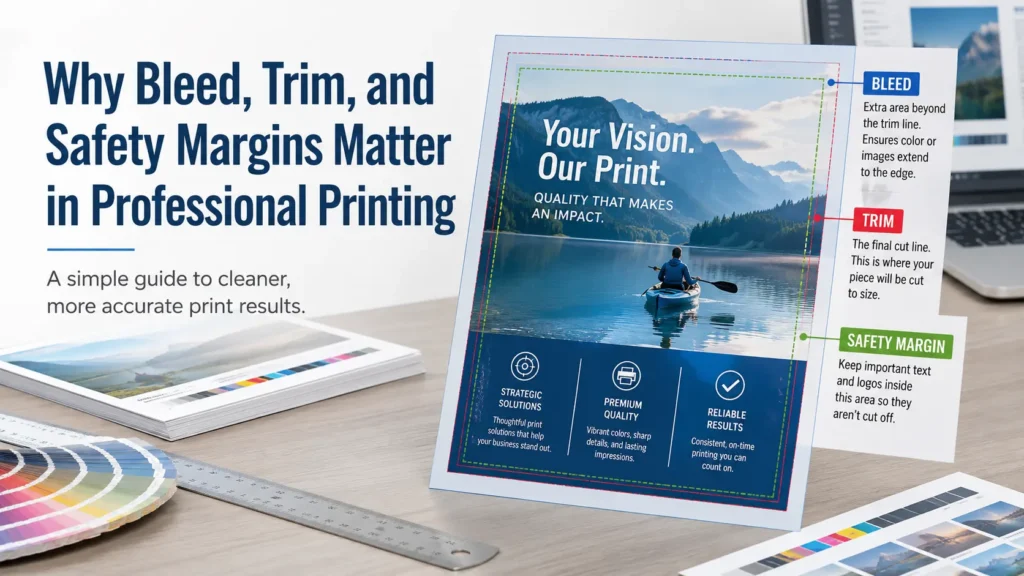
If your team is preparing artwork, check the print shop’s file requirements before submitting final files. Bleed, trim, safety margins, image resolution, color setup, and PDF export settings can vary by project. Premier Printing Services offers a helpful Prepress Toolkit for file setup, artwork, bleed, resolution, color, proofing, and prepress questions.
Paper choice also affects how your materials feel. A heavier stock may make sense for business cards, folders, and premium handouts. A lighter stock may be appropriate for internal forms or multi-page inserts. Coated papers can make colors feel sharper, while uncoated papers may feel more traditional and easier to write on. For more guidance, review this guide to choosing the right paper stock.
Always review proofs carefully. Check spelling, attorney names, bar admissions if listed, phone numbers, email addresses, QR codes, disclaimers, office addresses, and website URLs. It helps to assign one person final approval authority so changes don’t come from several directions at once.
Common law firm printing mistakes to avoid
- Ordering too late: Legal offices often need materials for events, hearings, client meetings, or announcements. Build in time for artwork, proofing, revisions, production, and delivery or pickup.
- Using outdated templates: Old bios, retired attorneys, former addresses, and outdated practice descriptions can create avoidable reprints.
- Sending low-quality logos: A logo copied from a website may not print clearly. Ask your designer or print shop what file type is best for your project.
- Skipping proof review: Proofs should be checked by someone who understands both the brand and the legal content.
- Mixing paper stocks without a plan: A firm’s materials don’t all need to use the same paper, but they should feel intentional when used together.
- Printing too many pieces with time-sensitive content: If attorney rosters, fees, dates, or event information may change, order thoughtfully.
For deadline planning, this print deadline checklist can help your team prepare artwork, copy, and approvals before the project becomes urgent.
When should a law firm ask a print shop for help?
Ask for help early if you’re creating a new folder system, mailing campaign, office stationery package, event display, or multi-location print program. A professional print team can help flag file issues, recommend paper options, explain finishing choices, and identify questions that should be answered before production.
You should also reach out if your firm has inconsistent branding across locations, frequent rush orders, repeated file problems, or staff members ordering from different sources. In those cases, a more organized printing process can save time and reduce errors.
Premier Printing Services supports law firm printing, business printing, mailings, prepress support, and branded materials for professional offices. If your firm needs help choosing the right mix of law firm print materials, reviewing files, or planning an upcoming project, contact Premier Printing Services for more information or project help.