Real estate printing supports a lot of moving parts, from new listing flyers and open house signs to direct mail postcards, presentation folders, and business cards. When the files are clean and the plan is clear, print can help agents, brokerages, property managers, and marketing teams move faster with fewer last-minute headaches.
The challenge is that real estate print projects often come with tight deadlines. A listing goes live, an open house gets scheduled, a property manager needs tenant notices, or a brokerage wants branded materials for a sales meeting. That’s when details like paper choice, bleed, image quality, and proof approval start to matter.
This guide explains what to know before ordering, what questions to ask, and how to prepare your files so your project is easier to quote and produce.
What Real Estate Printing Usually Includes
Real estate printing can include almost any printed piece used to market properties, communicate with clients, or support a sales team. Some projects are simple, like a short run of business cards. Others involve multiple pieces that need to match across a campaign.
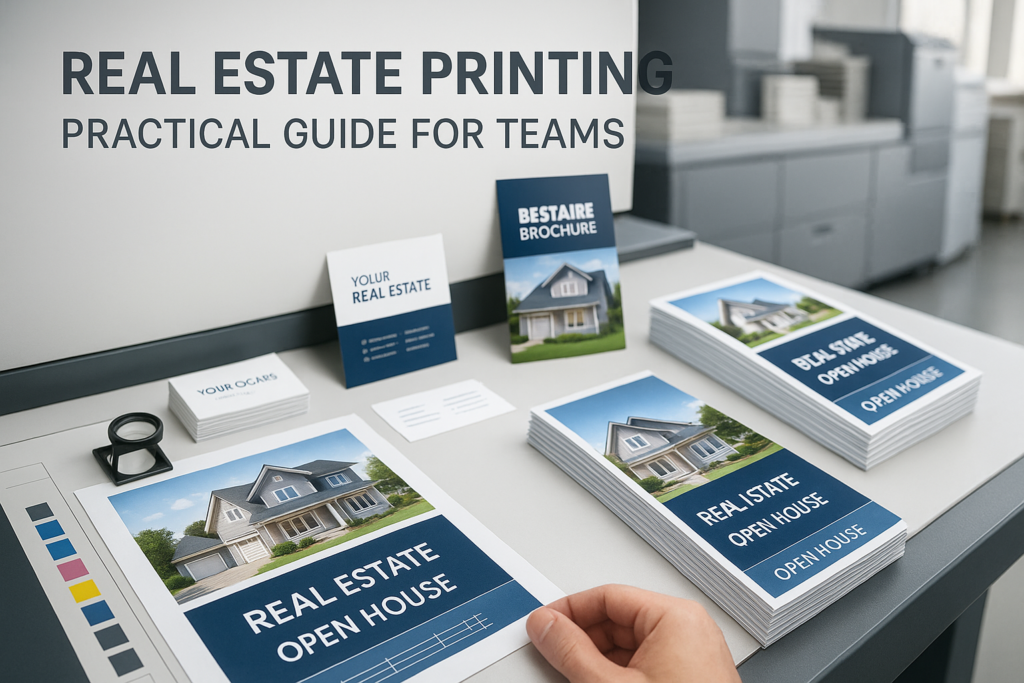
Common real estate print materials include:
- Property flyers and listing sheets
- Real estate brochures and booklets
- Open house signs and directional signage
- Direct mail postcards for neighborhoods or farming campaigns
- Business cards for agents and support staff
- Presentation folders and listing packets
- Door hangers, rack cards, and handouts
- Envelopes, letterhead, and branded office materials
- Banners for events, leasing offices, or property promotions
If you’re planning a larger campaign, it helps to group pieces by use. For example, your open house package might include flyers, directional signs, and a sign-in sheet. A listing presentation package might include a folder, inserts, market report pages, and an agent business card.
Premier Printing Services offers dedicated real estate printing services for teams that need consistent, professional materials across listings, campaigns, and office needs.
Start With the Purpose of the Piece
Before choosing paper or quantity, define what the printed piece needs to do. A flyer placed on a kitchen counter at an open house has different needs than a postcard mailed to 5,000 homes. A luxury property brochure may need a different finish than a basic leasing handout.
For open houses
Open house materials need to be clear, easy to read, and ready on time. Property highlights, price, contact information, QR codes, and strong photos should be organized so visitors can understand the offer quickly.
If signs are involved, think about viewing distance. Small type that looks fine on a screen may be hard to read from a sidewalk or passing car. For larger graphics, take a look at Premier’s banner printing options and confirm material recommendations before production.
For direct mail
Real estate direct mail often promotes just-listed, just-sold, market update, recruiting, or neighborhood farming campaigns. Mailing projects need extra planning because design, print, addressing, postage, and mailing rules may all affect the final schedule.
If you’re planning postcards or letters, ask early about sizing, address placement, indicia, paper stock, and mailing list requirements. Premier’s direct mail printing page is a useful starting point for mail-focused projects.
For client presentations
Listing presentations and buyer packets should feel organized and trustworthy. They don’t have to be overly complicated, but they should look consistent. A folder with clean inserts, a market summary, service overview, and professional business card can make the meeting feel more prepared.
If your team is refreshing cards, review these business card design tips before finalizing artwork.
File Setup Tips Before You Send Artwork
Many print delays start with file issues. The design may look good on screen, but production can still pause if the file is missing bleed, uses low-resolution images, has fonts that don’t display correctly, or includes colors that shift unexpectedly.
Before sending files, check the basics:
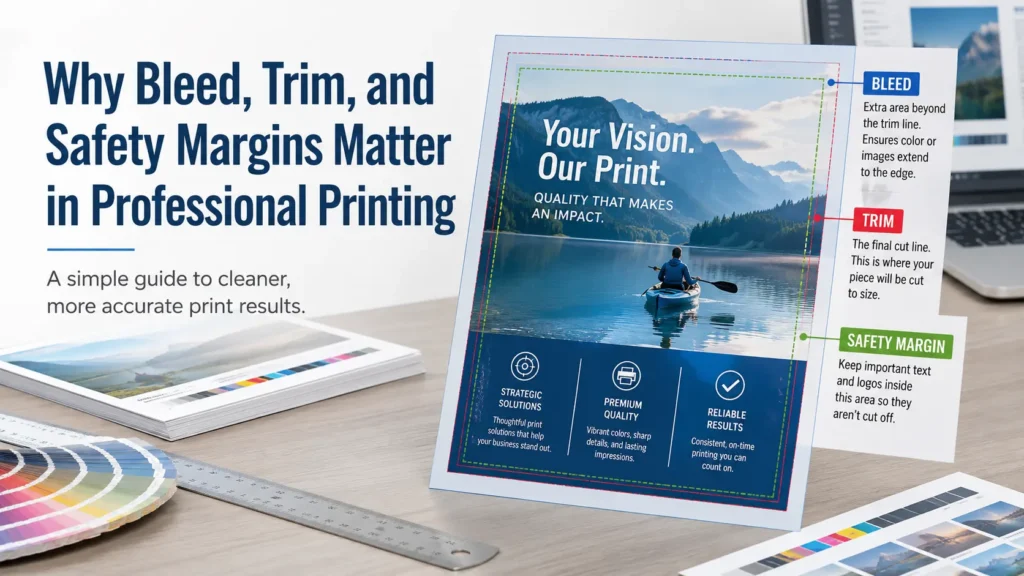
- Bleed: If artwork extends to the edge of the printed piece, include bleed as requested by the print shop.
- Safety margin: Keep text, logos, QR codes, and important details away from the trim edge.
- Resolution: Use high-quality property photos and logos suitable for print size.
- Color: Ask whether files should be supplied in a specific color mode or profile for the project.
- Fonts: Package fonts when appropriate or provide a print-ready PDF with fonts embedded or outlined.
- Proofing: Review names, phone numbers, license numbers, addresses, URLs, and QR codes carefully.
For a deeper file check, use the Premier Pre-Press ToolKit. It’s especially helpful when you’re preparing real estate brochures, postcards, signs, or multi-piece campaigns. You can also review this guide to bleed, trim, and safety margins if you’re not sure how close your content can sit to the edge.
Paper, Finishing, and Durability Considerations
Paper choice affects how a piece feels, folds, mails, and holds up during use. A lightweight sheet may be fine for a quick property flyer, while a thicker stock may be better for a postcard, premium brochure, or listing presentation insert.
Coated stocks can make photos look sharp and polished, while uncoated stocks may be easier to write on. If your piece will be mailed, folded, displayed outdoors, or handled often, mention that when requesting a quote. Those details can affect stock and finishing recommendations.
Finishing options may include folding, scoring, laminating, binding, drilling, or mounting, depending on the project. Availability and suitability vary by job, so confirm specs with the print shop before production.
If you’re comparing options, this article on how to pick the right paper stock can help you ask better questions before ordering.
Timeline Expectations and Approval Steps
Real estate teams often need materials quickly, but the best timeline depends on the project type, quantity, finishing, proofing, and whether mailing or installation is involved. A simple flyer order is different from a folded brochure, a direct mail campaign, or a group of signs and banners.
To avoid surprises, share your deadline when requesting a quote. Be specific about the event date, mail drop goal, listing launch, or meeting date. If files are still being designed, let the print shop know that too.
A typical approval process may include file review, proof generation, customer approval, production, finishing, and delivery or pickup. Don’t skip proofing because you’re in a hurry. Real estate pieces often include details that are easy to miss, such as suite numbers, website URLs, agent names, license information, disclosure language, and QR codes.
If you want help organizing a print campaign ahead of time, this article on planning print campaigns without last-minute file issues is a helpful companion.
Common Real Estate Printing Mistakes to Avoid
Most print problems are preventable. The earlier you catch them, the easier they are to fix.
- Using web images for print: Photos pulled from websites or MLS pages may not be suitable for large or high-quality printing.
- Forgetting bleed: Edge-to-edge backgrounds and photos need proper setup to trim cleanly.
- Putting text too close to the edge: Contact information and QR codes need breathing room.
- Ordering before confirming the final listing details: Price changes, room counts, and URLs should be final before approval.
- Choosing paper without considering use: A handout, mailed postcard, and luxury brochure may call for different stocks.
- Waiting too long to ask about mailing: Direct mail adds steps that should be discussed early.
- Not checking brand consistency: Brokerage colors, logos, fonts, and disclaimers should match across pieces.
If your logo or listing photos are questionable, review this guide on what makes a logo or photo suitable for high-quality print production.
When to Ask Your Print Shop for Help
You don’t need to know every production detail before contacting a printer. In fact, it’s often better to ask early, especially if your project includes folds, mail requirements, large-format signage, specialty paper, or multiple pieces that need to match.
Reach out before final design if:
- You’re not sure what size the piece should be
- You need the piece to mail efficiently
- You want photos to reproduce well
- You need help matching previous materials
- You’re ordering for multiple agents, offices, or locations
- You need a quote with several quantity or stock options
For teams that order regularly, a more organized print workflow can save time. Brokerages, property management groups, and corporate marketing teams may benefit from consistent templates, approved brand files, or a repeat ordering process. If that sounds familiar, explore Premier’s request portal options.
Real Estate Printing FAQ
What files should I send for real estate printing?
A print-ready PDF is often preferred, but requirements can vary by project. Include bleed when needed, use high-quality images, and make sure fonts are embedded or outlined. If you’re unsure, check the Pre-Press ToolKit or ask before submitting final artwork.
Can you print real estate flyers and postcards from my Canva or design files?
Many customer-created files can be printed if they’re exported correctly, but they still need to be reviewed for bleed, resolution, trim size, and font issues. Confirm export settings with the print shop before production.
What paper should I use for property flyers?
It depends on how the flyer will be used. A basic handout may use a different stock than a premium listing sheet or presentation insert. Share the purpose, quantity, and deadline so the printer can recommend options.
How early should I request a quote?
Request a quote as soon as you know the project scope, especially for direct mail, signs, folded pieces, or larger quantities. If your deadline is firm, include it with the quote request.
Can one printer handle brochures, cards, signs, and mailers?
Often, yes. Working with one print provider can help keep colors, paper choices, and brand details more consistent across the campaign. Ask what products and finishing options are available for your specific project.
Plan Your Next Real Estate Print Project With Fewer Surprises
Good real estate printing starts with clear goals, clean files, appropriate materials, and enough time for review. Whether you need listing flyers, postcards, business cards, open house signs, or a full marketing package, the best results come from sharing the project details early and asking questions before production begins.
If you already know what you need, you can request a quote with your project details. For more information or help planning a real estate printing project, contact Premier Printing Services.