If you’re trying to figure out how to get attention to a small business, start with a simple truth: people notice what is clear, repeated, and easy to act on. You don’t need to be everywhere. You need to show up in the right places with a message people can understand quickly.
For many small businesses, print still plays a major role in getting noticed. A sign outside your storefront, a flyer at a local event, a postcard in the mail, or a sharp business card after a conversation can all move someone from awareness to action.
The key is planning the piece around the job it needs to do. A banner has a different purpose than a brochure. A postcard needs different information than a sell sheet. When you match the format to the goal, your marketing works harder and your print budget is easier to control.
How to Get Attention to a Small Business: Start with the Right Audience
Before choosing a printed piece, decide who you’re trying to reach. Are you trying to bring walk-in traffic to a store? Book appointments? Promote a seasonal offer? Support a sales team? Attract people to an event?
That answer affects everything, including size, paper, quantity, distribution, and deadline. A restaurant promoting lunch specials may need window signage and takeout inserts. A professional service company may need business cards, presentation folders, mailed postcards, and leave-behind materials for meetings.
If you’re not sure where to start, a basic campaign plan can help. This guide on how to start a print marketing campaign walks through goals, audience, timing, and materials in a practical way.
Use Signs and Banners Where People Already Look
Good signage helps people notice you without making them work for it. Storefront signs, window graphics, sidewalk signs, banners, and directional signs can all support local visibility. The message should be short enough to read at a glance.
Think about viewing distance. A banner across a parking lot needs large type and a simple message. A counter sign can include more detail because the customer is already close to it. If the design tries to say too much, the most important point often gets lost.
For small businesses with foot traffic, outdoor visibility matters. This article on outdoor signs and banners for small businesses covers common use cases and planning considerations. You can also review banner printing options if you need a promotional display, event banner, or temporary sign.
Make Flyers and Handouts Useful, Not Crowded
Flyers are popular because they’re flexible. They can promote grand openings, events, coupons, services, menus, community programs, and limited-time offers. But a flyer only works if the reader understands the offer quickly.
Keep the headline direct. Use one main call to action, such as calling, scanning a QR code, visiting a landing page, or bringing the flyer into the store. If you include a discount or event date, make it easy to find.
Paper choice can also affect how the piece feels. A simple handout may not need the same stock as a premium sales sheet. If you’re unsure, ask the print shop what paper weights and finishes make sense for the quantity, usage, and budget. This overview of paper choice for printing can help you compare common considerations before ordering.
If flyers are part of your plan, review flyer printing services and think through how the pieces will be distributed before you finalize the design.
Use Direct Mail When Location Matters
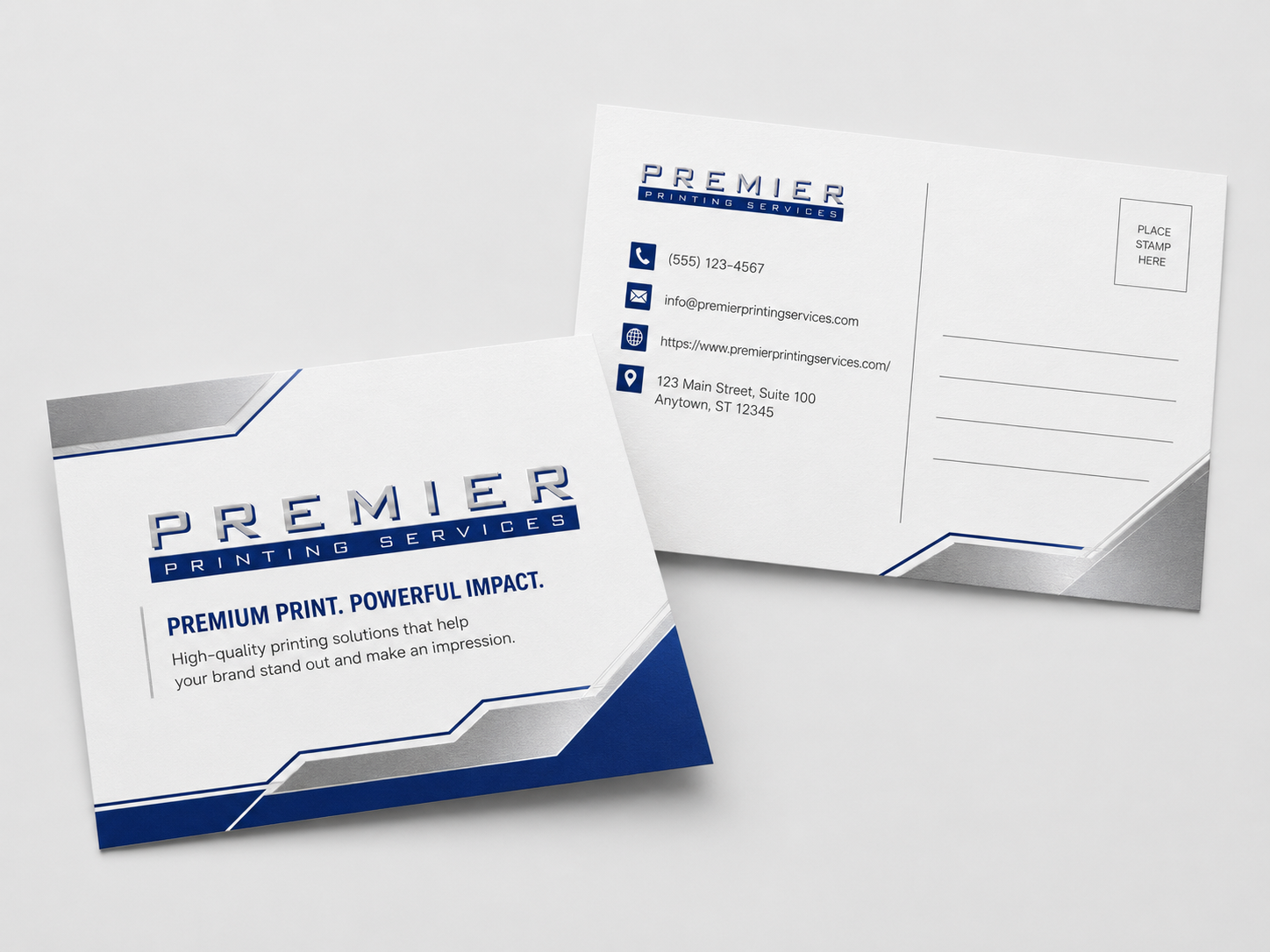
If your customer base is local or regional, direct mail can be a practical way to reach homes or businesses in a defined area. Postcards are often used for openings, special offers, reminders, announcements, and neighborhood promotions.
Direct mail works best when the offer is easy to understand and the next step is obvious. A postcard should not read like a full brochure. Focus on one message, one audience, and one action.
Mailing projects can involve size, addressing, postage, lists, and postal requirements that vary by job. Confirm details with your print provider before production. If mailing is part of your campaign, ask early so the design, addressing area, and timeline are planned correctly. You can learn more about available support through mass mailing services.
Keep Your Brand Consistent Across Every Touchpoint
Small businesses often get attention through repetition. Someone sees your sign, then receives a postcard, then meets you at an event, then keeps your business card. If every piece looks unrelated, the connection is weaker.
Consistency doesn’t mean everything has to look identical. It means your logo, colors, typography, tone, and core message should feel like they belong to the same company.
Business cards are a good example. They may be small, but they often stick around after a conversation. Make sure the card is easy to read, uses current contact information, and matches the rest of your materials. These business card design tips can help you avoid common layout problems. You can also review business card printing options when you’re ready to update or reorder.
Plan Print Projects Before the Deadline Gets Tight
A lot of print stress comes from waiting too long to gather files, approvals, quantities, and delivery details. Even straightforward projects can slow down if artwork is missing, copy changes are still happening, or no one has confirmed the final size.
Before ordering, collect the basics: finished size, quantity, paper preference if known, color requirements, finishing needs, delivery or mailing details, and your in-hand date. If you have multiple pieces, list each item separately so nothing gets missed.
Artwork should also be checked early. Bleed, trim, safety margins, image resolution, color setup, and font issues can all affect production. Requirements can vary by project, so confirm specs before final artwork is submitted. Premier Printing Services offers a helpful Prepress Toolkit for file setup, proofing, and artwork preparation questions.
If your team often runs into last-minute approval problems, this print deadline checklist for artwork, copy, and approvals is a useful planning resource.
Common Mistakes That Make Small Business Marketing Easier to Ignore
Many small business marketing pieces fail for avoidable reasons. The design may look nice, but the message is unclear. The offer may be strong, but the contact information is too small. The piece may be printed beautifully, but it arrives after the event.
Here are a few mistakes to watch for:
- Trying to say everything at once. Choose one main message per piece.
- Using low-quality logos or photos. Images that look fine on screen may not print well. Confirm file quality before production.
- Forgetting the call to action. Tell people exactly what to do next.
- Ordering the wrong quantity. Think about distribution, extras, staff copies, and future use.
- Ignoring paper and finish. The stock should match the use, not just the lowest cost.
- Waiting too long for approvals. Build in time for review, corrections, proofing, and delivery.
If cost control is a concern, don’t guess your way through it. This guide on how to reduce business printing costs explains practical ways to plan smarter without cutting corners that matter.
What to Prepare Before Requesting a Print Quote
A clear quote request helps the print shop respond with better information. You don’t need to know every technical detail, but the more context you provide, the easier it is to recommend the right format.
Include the type of piece, size, quantity, single-sided or double-sided printing, paper preference if you have one, finishing needs, mailing or delivery requirements, and the date you need it. If you already have artwork, mention the file type and whether it has been reviewed for print.
If you’re not sure what to order, explain the goal instead. For example, say, “We need something to hand out at a weekend event,” or “We want nearby homeowners to know about our new service.” A good print partner can help narrow the options.
For broader support, review small business printing services. If your team has recurring needs, branded templates, or multiple people ordering materials, a dedicated system may help. This article on why small businesses benefit from a dedicated portal explains how organized ordering can reduce confusion.
FAQ: Getting More Attention for a Small Business
What is the best printed material for getting attention?
It depends on the goal. Banners and signs help with visibility. Flyers work well for handouts and local promotions. Postcards can reach a selected area. Business cards support networking and referrals. Many campaigns use more than one piece.
How early should I start planning a print project?
Start as early as you can, especially if the project involves design, approvals, mailing, large quantities, special materials, or an event date. Turnaround can vary by project, so confirm timing with the print shop before committing to a launch date.
Can I supply my own artwork?
Yes, in many cases. Make sure the file is set up for print with the correct size, bleed if required, readable text, suitable image quality, and proper color setup. If you’re unsure, ask for a file review or use the Prepress Toolkit before production.
How do I keep print marketing from looking cheap?
Use clear messaging, strong spacing, readable type, quality images, and paper that fits the purpose. A clean, simple design usually works better than a crowded one.
Conclusion: Build Attention One Clear Touchpoint at a Time
Learning how to get attention to a small business is really about making your company easier to notice, remember, and contact. Use signs where people already pass by, flyers where people gather, mail when geography matters, and business cards when relationships matter.
Most importantly, plan the details before production starts. Clear goals, clean files, realistic deadlines, and the right printed format can make a noticeable difference.
If you’re planning a promotion, event, mailing, signage project, or everyday business printing, contact Premier Printing Services for more information or help with your project.