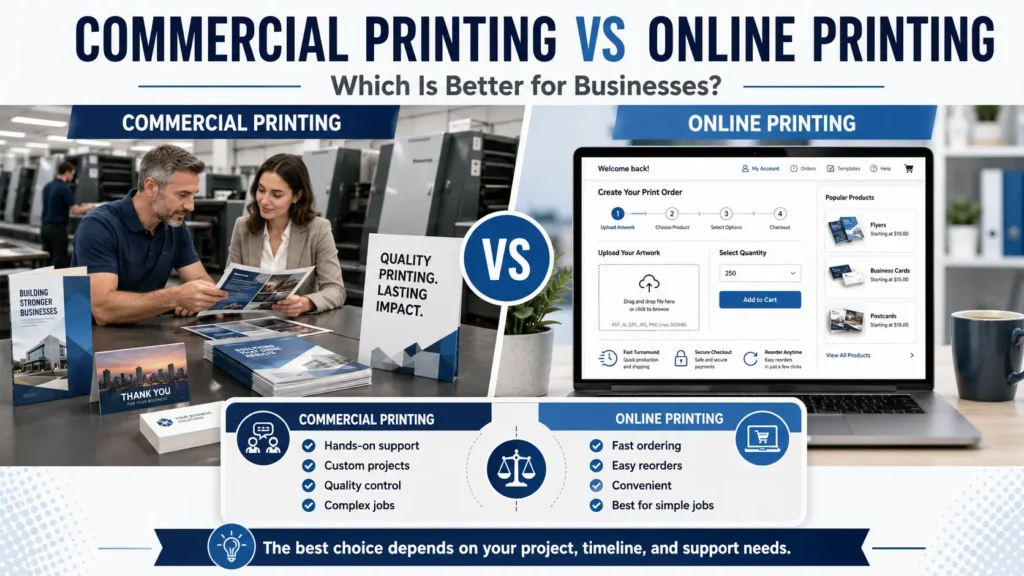
If you’re comparing commercial printing vs online printing, you’re probably trying to balance cost, convenience, quality, and deadline pressure. That’s a normal decision for small business owners, office managers, and marketing teams. Some print jobs are simple enough to order online without much discussion. Others need a real conversation before anything goes on press.
The best choice depends on what you’re printing, how important color and finish are, how tight your timeline is, and how confident you are in your files. A basic reorder of business cards is very different from a multi-piece campaign with brochures, envelopes, signage, and direct mail.
This guide breaks down the practical differences so you can make a better decision and avoid common print problems.
What Businesses Usually Mean by Online Printing
Online printing usually refers to placing an order through a website, uploading artwork, choosing preset options, and waiting for production and delivery. It can be convenient for straightforward products with standard sizes, standard paper options, and files that are already set up correctly.
For example, an online order may work well when you need a simple flyer, a standard postcard, or a repeat order that has already printed successfully before. If your file is final, your specs are clear, and you don’t need much guidance, online ordering can be efficient.
The tradeoff is that online systems are usually built around predefined choices. If something about your project is unusual, unclear, or brand-sensitive, you may not get the level of review or consultation you need before production.
What Commercial Printing Offers
Commercial printing is usually more consultative. Instead of choosing from a limited menu and hoping the file is right, you can talk through the project with a print professional. That can include paper recommendations, finishing options, mailing needs, packaging, kitting, brand standards, and scheduling.
Businesses often use business printing services for projects where accuracy, presentation, and coordination matter. This may include sales materials, corporate stationery, training packets, event collateral, direct mail, retail signage, or recurring orders across departments.
Commercial printing can also be helpful when you’re not sure what specs to choose. Paper weight, coating, folds, binding, and finishing can affect the final result. If those choices are unfamiliar, it’s better to ask before placing the order.
Commercial Printing vs Online Printing: Key Differences
The biggest difference between commercial printing vs online printing is not only where you place the order. It’s the amount of project support available before production begins.
1. Guidance before ordering
Online printing works best when you already know exactly what you need. Commercial printing is better when you need help choosing paper, format, quantity, finishing, or mailing options.
For example, a marketing team planning a brochure may need to compare folded sizes, paper stocks, and coatings. A print shop can explain how those choices affect the finished piece and help you avoid selecting specs that don’t fit the goal of the project.
2. File review and prepress support
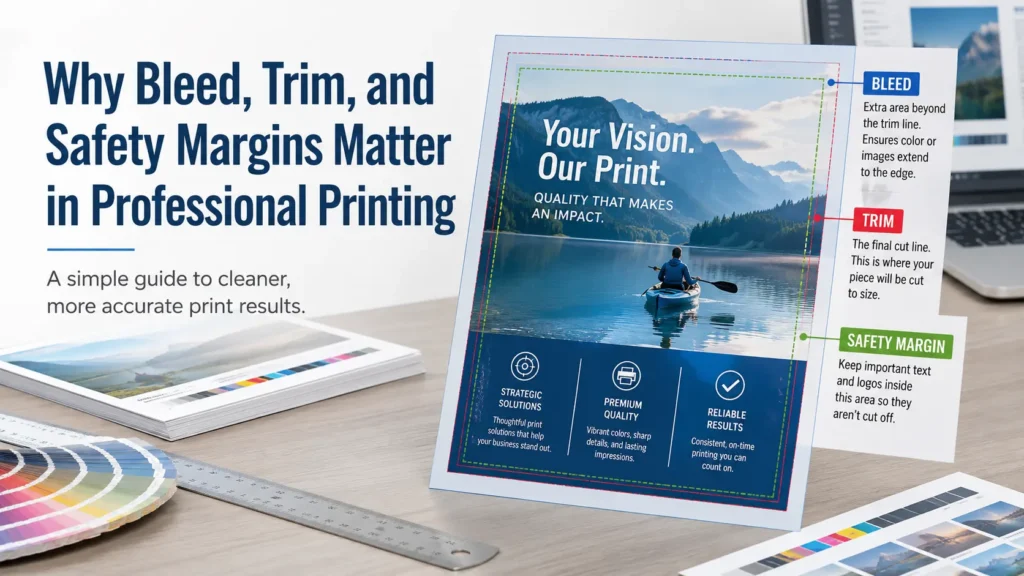
Many print problems start with file setup. Common issues include missing bleed, low-resolution images, RGB color, fonts that aren’t embedded, incorrect trim size, and artwork too close to the edge.
When artwork, bleed, resolution, color, proofing, or prepress questions come up, it helps to review a resource like the Premier Pre-Press Toolkit. You can also read more about bleed, trim, and safety margins if you’re setting up files internally.
Online platforms may flag some file issues automatically, but automated checks don’t always catch design concerns, brand inconsistencies, or content mistakes. Commercial printers can often provide more practical feedback before production, especially if the project has multiple pieces.
3. Paper and finishing options
Paper affects how a piece feels, folds, mails, and represents your brand. A lightweight flyer, a premium brochure, and a formal invitation should not all be treated the same way.
If you’re unsure about stock, coating, or finish, review this guide to choosing the right paper for printing. Exact recommendations can vary by project, so confirm the final specs with your print shop before production.
Commercial printing is often a better fit when finishing matters. This may include folding, scoring, binding, die-cutting, laminating, drilling, tabs, envelopes, or coordinated sets of materials. Online systems may offer some of these options, but they may not explain when they’re needed or how they affect the final result.
4. Color and brand consistency
Businesses care about brand consistency. A logo that looks slightly different across business cards, brochures, banners, and mailers can make a company look less organized.
Commercial printers can help review color expectations and discuss practical limits. Print color can vary based on paper, coating, equipment, and file setup. If color is critical, ask about proofing options before approving production.
5. Timelines and coordination
Online ordering can feel fast because the steps are self-service. But if the file is rejected, the proof is missed, or shipping is delayed, the schedule can become stressful.
Commercial printing can be especially useful when several moving parts need to line up. Examples include event materials, direct mail campaigns, trade show graphics, office rollouts, or multi-location orders. If timing matters, use a planning resource like this print deadline checklist before sending files.
Do not assume every print provider has the same turnaround time. Production schedules depend on the product, quantity, materials, finishing, proof approvals, and workload. Always confirm timing before you commit to an event date, mailing date, or launch date.
When Online Printing May Be Enough
Online printing may be a reasonable choice when the project is simple, low-risk, and already prepared correctly. It can work well for standard items with no special finishing and no need for brand consultation.
It may also make sense for a one-time internal piece where exact color, paper feel, and finishing are not major concerns. If the file has printed before and you’re confident nothing has changed, self-service ordering may save time.
The key is being honest about the risk. If a mistake would only be mildly inconvenient, online printing may be fine. If a mistake would delay an event, waste a marketing budget, or create brand problems, it’s worth getting professional input.
When Commercial Printing Is the Better Choice
Commercial printing is usually the better choice when the project has higher stakes. That includes customer-facing marketing materials, investor presentations, event graphics, sales kits, direct mail, branded stationery, and anything with unusual sizing or finishing.
It’s also a strong fit when multiple departments or locations need consistent materials. Businesses with recurring orders may benefit from organized ordering systems, brand controls, and repeatable specs. If that sounds familiar, this article on why small businesses benefit from a dedicated portal may be useful: dedicated printing portals for small businesses.
For larger teams, corporate printing services can help centralize materials and reduce one-off ordering confusion. For smaller teams, small business printing support can help you choose practical options without overcomplicating the project.
Common Mistakes Businesses Should Avoid
Whether you order online or work with a commercial printer, the same mistakes can cause delays or disappointing results.
- Uploading the wrong file version. Final-final files are not always final. Name files clearly and remove outdated versions from shared folders.
- Forgetting bleed and safe margins. Artwork that runs to the edge usually needs bleed, and important text should stay inside the safe area.
- Using low-resolution images. Images that look fine on screen may not print sharply, especially when enlarged.
- Skipping proof review. Proofs should be checked for spelling, phone numbers, dates, addresses, QR codes, folds, page order, and color expectations.
- Choosing paper only by price. The cheapest stock may not support the purpose of the piece, especially for premium sales materials.
- Waiting too long to ask for help. Print projects get harder to fix as deadlines get closer.
If your team often runs into last-minute artwork changes, this guide on planning print campaigns without file issues can help you build a cleaner process.
What to Prepare Before Requesting a Print Quote
A good quote starts with clear information. You don’t need to know every technical detail, but the more context you provide, the easier it is for a print shop to recommend the right path.
Before requesting a quote, try to gather:
- Product type, such as flyer, brochure, booklet, postcard, banner, envelope, or business card
- Finished size and number of pages, if known
- Quantity needed
- Paper preference, or examples of pieces you like
- Color requirements, such as full color or black only
- Finishing needs, such as folding, binding, coating, scoring, or drilling
- Mailing, shipping, delivery, or packaging needs
- Target in-hand date or event date
- Current artwork status, such as final file, draft file, or design help needed
If you don’t know some of these answers, that’s okay. A commercial print shop can help you narrow the options based on your use case and budget goals.
Commercial Printing vs Online Printing: Which Should You Choose?
The right answer depends on the project. Online printing can be practical for simple, standard, low-risk orders when your files are ready and your specs are clear. Commercial printing is usually the better choice when quality, guidance, timing, finishing, brand consistency, or coordination matter.
For most business projects, the safest approach is to ask questions before ordering. A short conversation can prevent file problems, paper mismatches, missed approvals, and deadline stress.
If you’re weighing commercial printing vs online printing for an upcoming project, Premier Printing Services can help you review your options and choose a practical path. Contact Premier Printing Services for more information, a quote, or help planning your next print project.