Unit price is important, but it shouldn’t be the only deciding factor in commercial printer selection. A low price per piece can look attractive on a spreadsheet, then create extra costs through file fixes, missed details, reprints, rushed delivery, or inconsistent materials.
For purchasing teams in Chatsworth, the San Fernando Valley, and greater Los Angeles, the better question is: which printer can produce the job accurately, communicate clearly, and help your team avoid preventable problems? That answer usually comes from comparing the full project, not only the line item price.
If you’re collecting bids for marketing collateral, manuals, direct mail, event materials, retail signage, or corporate print programs, use the points below to build a stronger commercial printing quote comparison.
Why the lowest print price can cost more later
Print buying often starts with a simple request: quantity, size, paper, color, and due date. That works for basic comparisons, but many real projects have details that affect the final result.
For example, a brochure quote may not include folding, scoring, hard-copy proofs, file correction, special packaging, split shipments, or delivery to multiple office locations. A wide format sign quote may not specify mounting material, grommets, lamination, or installation considerations. A direct mail quote may leave out list processing, addressing, postage coordination, or USPS-related requirements.
None of those details are minor when your sales team, event staff, school office, nonprofit board, or executive team is waiting on the finished product. The cheapest unit price can become expensive if it leaves gaps your team has to solve at the last minute.
Commercial printer selection starts with the full scope
A useful quote comparison begins with a complete project scope. If each printer is quoting a slightly different version of the job, your procurement team isn’t comparing equal options.
Before requesting estimates, gather the basics:
- Final size, flat size, and folded size if applicable
- Quantity, including whether you need one version or multiple versions
- Number of pages, panels, or pieces
- Color requirements, such as full color, black only, or brand color concerns
- Paper type or desired feel, if known
- Finishing needs, such as folding, binding, drilling, tabs, lamination, mounting, or die cutting
- Proofing expectations
- Delivery, pickup, mailing, or split-shipment requirements
- Target in-hand date, not just the date you hope to approve artwork
If you’re not sure about paper or finishing, that’s fine. Say so. A good print partner can help you compare options and explain tradeoffs. For physical examples, a business print sample kit can also help teams align on paper weight, coating, and finish before production.
Compare prepress support, not just production pricing
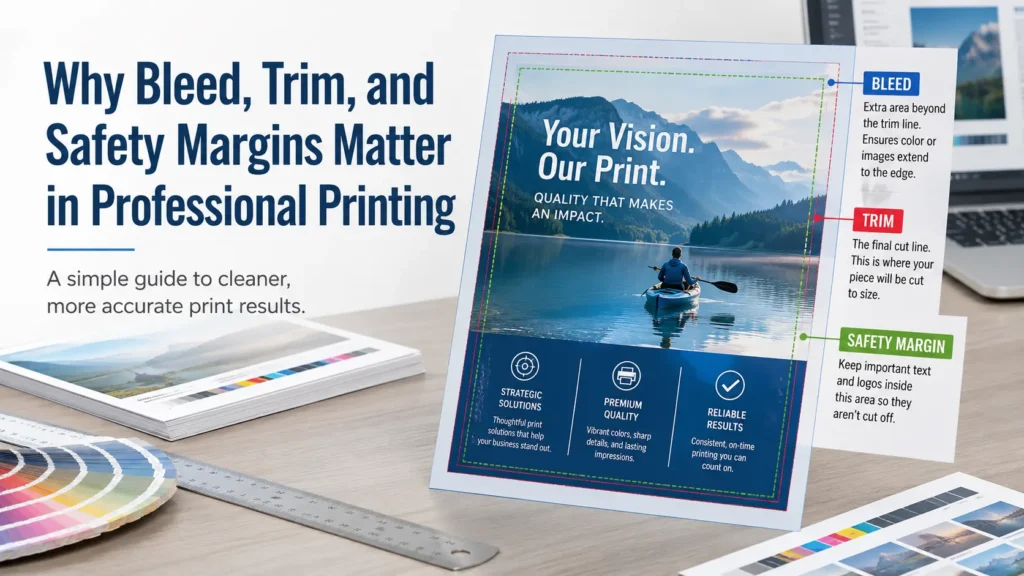
File issues are one of the most common reasons print jobs slow down. Procurement may receive a low bid, but the marketing team may later find out the file has missing bleed, low-resolution images, incorrect folds, font problems, or color setup concerns.
When comparing printers, ask what level of prepress review is included. Do they check for common production problems before printing? Will they flag concerns clearly? Can they help with minor file adjustments, or would that require a separate design service?
Common file setup points to confirm include:
- Bleed and safety margins
- Image resolution and linked graphics
- PDF export settings
- Page order for booklets or manuals
- Folds, panel sizes, and mailing panel placement
- Color expectations and brand consistency
Specs can vary by product and production method, so confirm requirements before final artwork is supplied. If your team needs a refresher, the Prepress Toolkit is a useful resource for artwork setup, bleed, resolution, color, and proofing basics.
Ask how proofs and approvals are handled
Proofing is where many expensive mistakes are caught. It is also where timelines can slip if responsibilities aren’t clear.
Ask each printer what type of proof is available or recommended for your project. A digital proof may be enough for some jobs. Other projects may benefit from a hard-copy proof, especially when color, paper, folding, pagination, or finishing is important. The right proofing approach depends on the job, budget, schedule, and risk level.
Your team should also confirm who is responsible for approving copy, layout, quantities, version names, mailing information, and delivery details. The print shop can help spot production issues, but it won’t know whether a phone number, legal disclaimer, menu price, or event date is correct unless your team reviews it carefully.
For projects with many stakeholders, this print deadline checklist for artwork and approvals can help prevent last-minute confusion.
Review paper, finishing, and brand consistency
Two quotes can list the same finished size and quantity while producing pieces that feel very different. Paper, coating, binding, and finishing all affect how the final product is perceived.
A purchasing team comparing postcards, brochures, pocket folders, catalogs, training manuals, or sales kits should ask whether the paper stock is comparable across bids. Is it coated or uncoated? Text weight or cover weight? Does the finish need to match previous brand materials? Will it be mailed, handed out, inserted into a folder, written on, or displayed?
Finishing deserves the same attention. Folding, scoring, saddle stitching, perfect binding, drilling, tabs, lamination, and mounting can affect both appearance and function. If your staff needs to assemble kits, distribute materials across departments, or store items for repeated use, those practical details matter.
For organizations with recurring branded materials, consistency can be more valuable than a tiny unit-price difference. If departments or locations order their own versions, a corporate print portal may help control approved templates, ordering access, and repeat purchases.
Look at schedule reliability and local logistics
In Los Angeles business printing, logistics can affect the project as much as production. A team in Chatsworth may need materials delivered to a San Fernando Valley office, a downtown event venue, a school campus, a retail location, or multiple sales reps across the region.
When comparing print quotes, ask how the schedule is built. Does the timeline begin after file approval, proof approval, deposit, purchase order, or some other milestone? What happens if artwork is delayed by a day? Are delivery, pickup, mailing, or distribution included in the estimate?
Avoid assuming that a quoted production window includes every step. Print projects often involve file review, proofing, approvals, production, finishing, packing, and transit. Exact timing varies by product, quantity, finishing, materials, and current workload, so confirm the schedule before production begins.
Understand total landed cost
Total landed cost is the real cost of getting finished materials into the right hands, in usable condition, when they’re needed. It includes more than the printing itself.
Purchasing teams should compare whether each quote includes:
- Prepress review or file correction
- Proofs
- Paper upgrades or substitutions
- Finishing and handwork
- Packaging, labeling, or kitting
- Delivery, freight, courier, or pickup arrangements
- Mailing services, if applicable
- Storage, inventory, or repeat-order support
- Rush handling, if the schedule changes
This is where print procurement can move from price shopping to cost control. If your business is managing many vendors, locations, departments, or repeat orders, print vendor consolidation may reduce administrative work and make spending easier to track.
Use a practical quote comparison checklist
Before awarding a job, create a side-by-side comparison that includes both price and risk. This doesn’t need to be complicated. A simple spreadsheet can work well.
Compare these factors for each printer
- Scope match: Are all vendors quoting the same size, quantity, paper, color, finishing, and delivery requirements?
- File support: Is prepress review included, and how are file problems communicated?
- Proofing: What proof type is included or recommended, and who approves it?
- Materials: Are paper, coating, binding, and finishing clearly specified?
- Schedule: What triggers production, and what steps are included before the in-hand date?
- Communication: Will you have a clear contact for questions, revisions, and status updates?
- Logistics: Are delivery, mailing, kitting, or multi-location shipments included?
- Repeatability: Can the printer support future orders, version control, and brand consistency?
- Total cost: Are add-ons, exclusions, and possible change fees clear?
Common mistakes include sending incomplete specs, comparing different paper stocks as if they’re equal, ignoring proofing steps, waiting too long to involve the printer, and assuming the lowest quote includes every service needed to complete the job.
When to ask for help before requesting quotes
Some projects are straightforward. Others benefit from a short planning conversation before bids are collected.
Ask for help early if your project includes multiple versions, tight approval chains, mailing requirements, unusual finishing, large-format graphics, event deadlines, franchise or multi-location ordering, or materials that must match an existing brand system. It is usually easier to design the print specifications correctly at the beginning than to correct files or change materials after approval.
If your team is comparing vendors for a broader program rather than a one-time job, a print management services approach may be worth reviewing. For marketing teams that order many recurring pieces, marketing collateral printing support can also help keep common materials organized and consistent.
Build a quote comparison that protects the project
The best commercial printer selection process doesn’t ignore price. It puts price in context. A useful quote should make the scope clear, identify what is included, explain what still needs confirmation, and give your team confidence that the finished materials will work for their intended purpose.
For buyers in Chatsworth, the San Fernando Valley, and greater Los Angeles, that can mean fewer surprises, smoother approvals, better brand consistency, and less time spent solving preventable print problems. Before you choose the lowest unit price, compare the full project path from file setup to final delivery.