Choosing a commercial printing company is not just about finding someone who can put ink on paper. For most businesses, printing is tied to deadlines, brand consistency, sales materials, event dates, mailing schedules, and internal approvals. A good print partner helps you avoid problems before they become expensive or stressful.
If you’re a small business owner, office manager, or marketing coordinator, you may be ordering business cards one week, brochures the next, and event signage the week after that. The right printer should be able to guide you through options, flag file issues, explain realistic timelines, and provide a clear path from quote to delivery.
This guide walks through what to look for, what questions to ask, and how to prepare before requesting a print quote.
Start With the Type of Printing You Need
Before comparing print shops, define what you need printed and how the piece will be used. A company that does a great job on simple office forms may not be the best fit for a multi-piece marketing campaign, trade show package, or branded mailer.
Common business printing needs include:
- Business cards, letterhead, envelopes, and stationery
- Flyers, brochures, postcards, and sales sheets
- Presentation folders, booklets, and reports
- Banners, posters, signs, and event graphics
- Direct mail pieces and mailing support
- Branded materials for multiple locations or departments
If your company orders a mix of printed materials, look for a printer that understands everyday business needs as well as campaign-based projects. Premier Printing Services has dedicated pages for business printing, corporate printing, and small business printing that can help you think through common project types.
What to Look for in a Commercial Printing Company
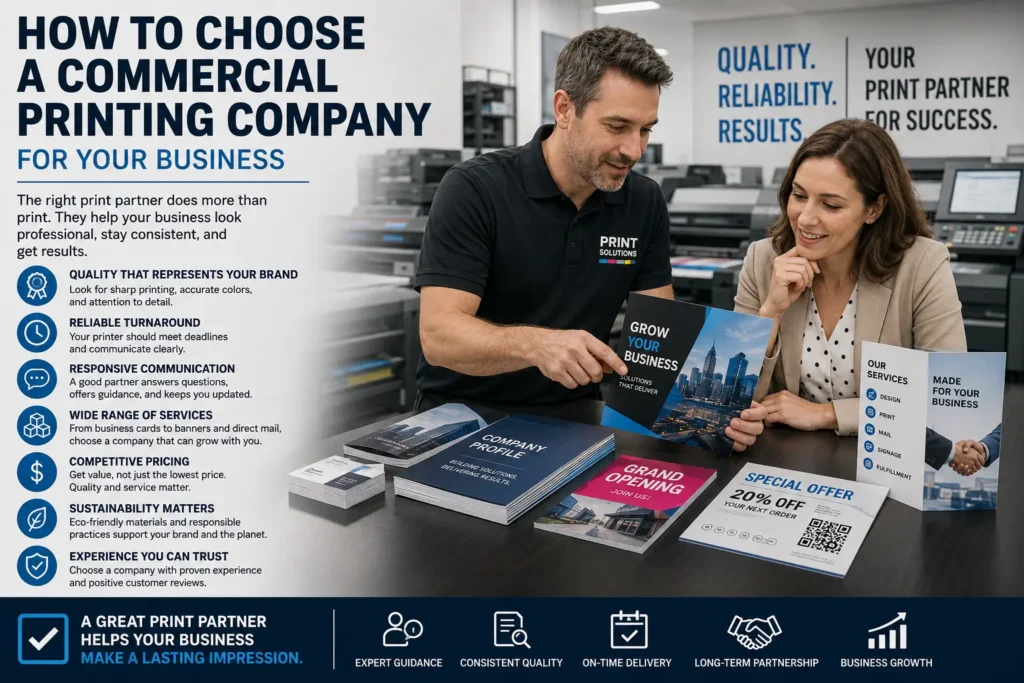
A reliable commercial printing company should offer more than a product list. You want a team that asks good questions, understands production steps, and communicates clearly when something needs attention.
When evaluating a print provider, consider these factors:
- Project range: Can they handle the types of materials your business orders most often?
- Prepress support: Will they review files and alert you to possible problems before production?
- Paper and finishing guidance: Can they explain options in plain language?
- Communication: Do they respond clearly and ask for missing details upfront?
- Ordering process: Is it easy to request a quote, upload files, approve proofs, and reorder?
- Business fit: Do they understand deadlines, brand standards, and repeat ordering needs?
Not every job requires the same level of support. A simple reorder may be quick and straightforward. A new brochure, direct mail campaign, or multi-location print program may need more planning.
Ask About File Setup, Proofing, and Prepress Support
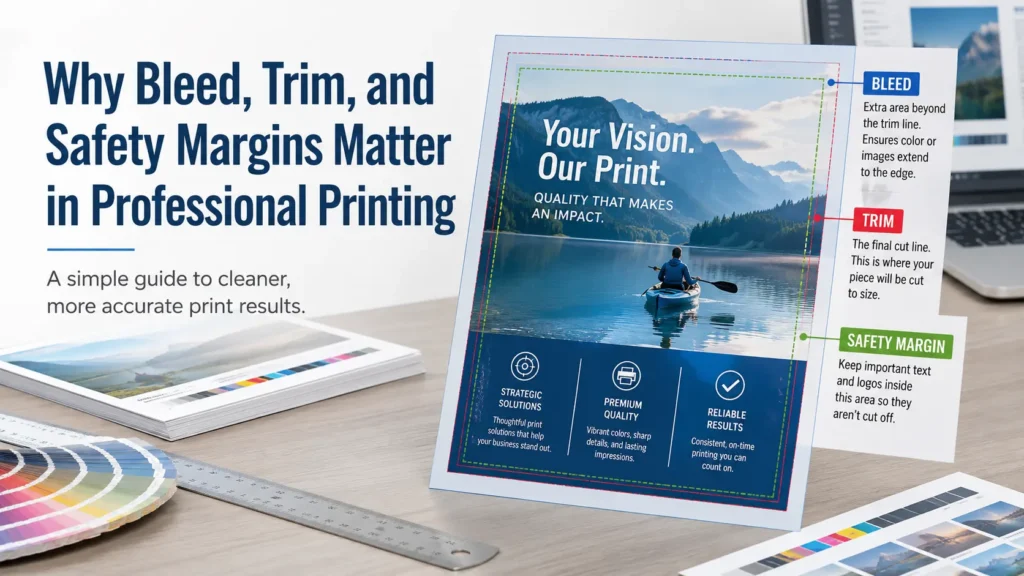
File issues are one of the most common causes of print delays. Low-resolution images, missing bleed, incorrect sizing, color concerns, and font problems can slow a project down, especially if approvals are already tight.
Before placing an order, ask how the printer handles file review and proofing. If you’re not sure whether your artwork is ready, use a resource like the Premier Pre-Press ToolKit or ask the print shop to review your file before production. For a deeper look at margins and trimming, this guide to bleed, trim, and safety margins is also helpful.
Good questions to ask include:
- Do you check files before printing?
- What file format do you prefer?
- Do you provide a proof before production?
- How should bleed, margins, images, and color be prepared?
- Can your team help fix artwork if needed?
Exact file requirements can vary by product, equipment, and finishing method, so confirm specs with the print shop before production. If you need design or file help, a service like prepress and graphic design support can save time and reduce back-and-forth.
Compare Communication, Not Just Equipment
Equipment matters, but communication often determines whether a print project goes smoothly. You want a company that confirms the important details before the job is in production.
A professional printer should be comfortable discussing quantity, size, paper, color, finishing, delivery needs, mailing requirements, and deadline. They should also tell you when a choice may affect production, cost, or durability.
For example, a marketing team ordering event handouts may need materials packed by location or grouped by event date. An office manager may need stationery to match previous orders. A small business owner may need help deciding whether a flyer, postcard, or brochure is the better format. Those details matter.
Review Paper, Finishing, and Mailing Options
Paper choice can change how a printed piece feels, folds, mails, and holds up. A heavy cover stock may be right for a postcard or business card, while a lighter text stock may be better for multi-page documents. Coated and uncoated papers also feel different and can affect the look of photos, colors, and writing surfaces.
If you’re unsure, ask for recommendations based on how the piece will be used. You can also review this practical guide to choosing the right paper stock.
Finishing options may include folding, scoring, binding, trimming, drilling, laminating, or special coating, depending on the project. Mailing services may also be important if you’re producing postcards, letters, newsletters, or campaign materials. If mailing is part of the job, ask early about size, addressing, postage-related considerations, and data preparation. Requirements can vary, so it’s best to confirm before design is finalized.
For direct mail projects, Premier Printing Services offers information on direct mail printing and mass mailing services.
Plan Around Deadlines and Approval Time
Print timelines depend on the product, quantity, finishing, proofing, material availability, delivery method, and how quickly approvals happen. Instead of assuming a deadline is workable, share your in-hand date when requesting a quote.
Build in time for file review, proof approval, possible revisions, production, finishing, packing, and shipping or pickup. If several people need to approve the artwork, include that in your schedule. Internal approval delays are a common reason projects become rushed.
If your team struggles with last-minute changes, the print deadline checklist for artwork, copy, and approvals is a useful planning tool. It can help you gather copy, logos, photos, mailing data, and approvals before the project reaches production.
Common Mistakes to Avoid When Choosing a Printer
Many print problems start before the file is uploaded. Here are a few mistakes to watch for when selecting a commercial print shop:
- Choosing only by the lowest quote: A low price may not include the same paper, finishing, support, proofing, or delivery details.
- Waiting too long to ask questions: Paper, mailing, folds, and sizes can affect design decisions.
- Sending incomplete specs: Missing size, quantity, paper, color, or deadline details can slow quoting.
- Assuming files are print-ready: Artwork that looks fine on screen may not be ready for production.
- Skipping proof review: Proofs should be checked carefully for content, layout, names, dates, phone numbers, and addresses.
- Not planning for reorders: If you’ll need the same item again, ask how files and specs are stored for future use.
What to Include When Requesting a Print Quote
A clear quote request helps the printer respond faster and more accurately. You don’t need to know every technical detail, but you should provide as much information as you can.
Include:
- Product type, such as flyer, postcard, booklet, banner, or business card
- Finished size
- Quantity
- Single-sided or double-sided printing
- Color requirements, if known
- Paper preference or intended use
- Finishing needs, such as folding, binding, scoring, or drilling
- Mailing or delivery requirements
- Deadline or desired in-hand date
- Whether artwork is ready or design help is needed
If you don’t know the best paper, size, or format, say so. A good printer can often recommend options once they understand the purpose of the piece.
When to Ask for Help Before Ordering
Ask for help early if the project has a firm event date, multiple versions, mailing data, brand requirements, special finishing, or files created by different people. Early questions are much easier to solve than last-minute production problems.
You should also ask for guidance if your artwork includes small text, QR codes, photos pulled from the web, complicated folds, borders close to the trim, or color that must stay consistent with previous materials. These details can affect print quality and should be reviewed before production.
Final Thoughts on Choosing a Commercial Printing Company
The best commercial printing company for your business is one that understands your goals, communicates clearly, reviews the details, and helps you make practical choices. Look for a print partner that can support both simple reorders and more involved marketing projects.
When you’re ready to discuss a project, gather your specs, files, questions, and deadline. If some details are still undecided, that’s okay. A knowledgeable print team can help you sort through options and prepare a quote.
FAQ
How do I know if my artwork is ready for print?
Your artwork may be ready if it is sized correctly, includes proper bleed when needed, uses high-quality images, and has been checked for spelling, contact information, and layout issues. Because requirements vary by product, it’s smart to have the printer review your file before production. The Premier Pre-Press ToolKit is a helpful starting point.
Should I choose a local printer or an online print provider?
It depends on the project. If you need guidance, custom specs, mailing support, repeat orders, or deadline coordination, working directly with a professional print team can be helpful. For complex projects, communication and file review often matter as much as ordering convenience.
What should I ask before approving a proof?
Check the proof for spelling, names, phone numbers, addresses, dates, QR codes, page order, layout, and any visible design issues. A proof is usually meant to confirm content and layout, but you should ask your printer what the proof does and does not represent before approving it.
How early should I request a quote?
Request a quote as soon as you know the project is likely to move forward, especially if it involves finishing, mailing, multiple approvals, or an event date. Turnaround varies by project, so confirm timing with the print shop before making commitments.
Need help choosing specs or preparing your next print project? Contact Premier Printing Services for more information or project help.